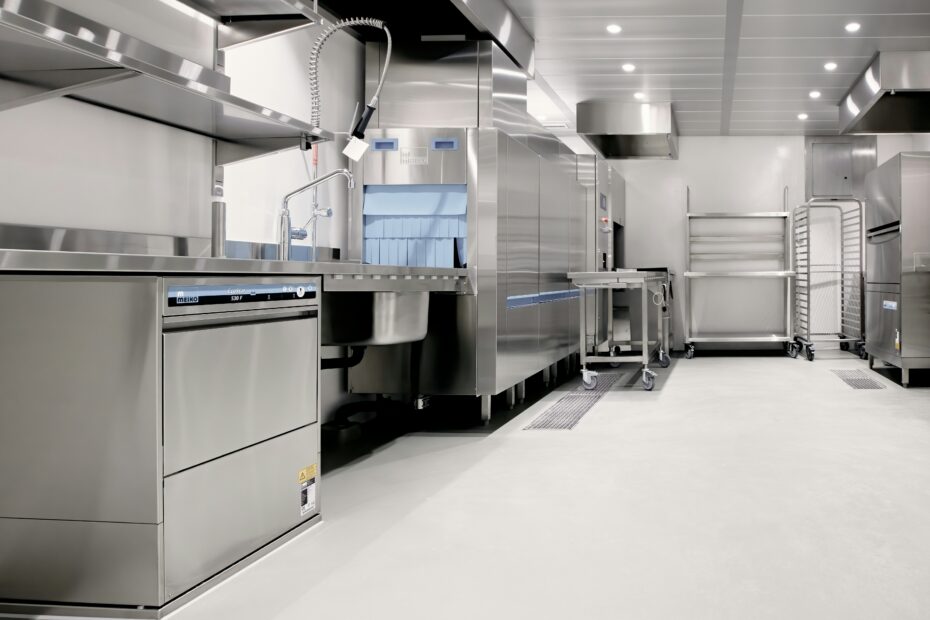
“Clean to bare metal” means removing accumulated grease, oil, and other combustible deposits from the accessible metal surfaces inside a commercial kitchen exhaust system. The goal is to eliminate hazardous grease buildup, not simply make the visible kitchen hood look clean and shiny.
Professional commercial kitchen hood cleaning involves more than the stainless steel canopy above the cooking equipment. It also addresses grease-removal devices, the hood plenum, exhaust ducts, and exhaust fans where grease accumulates.
For restaurant owners in Albuquerque and Santa Fe, understanding this distinction is important. A hood can look spotless from the kitchen while grease remains inside concealed ductwork or a rooftop exhaust fan.
The real measure of a thorough cleaning is how effectively combustible deposits have been removed throughout the exhaust system, including the areas customers and employees rarely see.
What Does “Clean to Bare Metal” Actually Mean?
In commercial kitchen exhaust cleaning, “clean to bare metal” describes the removal of grease deposits until the underlying metal surface is exposed rather than covered by combustible residue.
During cooking, grease-laden vapors rise into the exhaust hood. Some grease is captured by the filters, but some travels farther into the ventilation system.
As those vapors cool, grease can collect on interior surfaces. Over time, deposits may become sticky, hardened, or thick enough to create a serious fire hazard.
Professional cleaning removes those deposits using methods appropriate for the equipment.
However, there is an important distinction between the industry phrase “clean to bare metal” and the exact wording of current fire protection standards.
What Does NFPA 96 Say About Cleaning to Bare Metal?
The <a href=”https://link.nfpa.org/all-publications/96/2024″>NFPA 96 Standard for Ventilation Control and Fire Protection of Commercial Cooking Operations</a>, published by the National Fire Protection Association, addresses inspection, cleaning, and fire protection requirements for commercial cooking ventilation systems.
The 2001 edition used explicit “clean to bare metal” wording. Later editions revised that language to focus on removing combustible contaminants from the exhaust system.
The 2024 edition includes more specific provisions addressing grease-deposit measurements and cleaning requirements.
That means “clean to bare metal” is useful industry terminology, but it should not be treated as a verbatim quotation from every edition of NFPA 96.
The applicable requirements depend on the edition adopted and enforced by the authority having jurisdiction, such as the local fire prevention authority.
For restaurant owners, the practical objective remains consistent: grease-contaminated exhaust components must receive appropriate cleaning, not just cosmetic attention.
Does Clean to Bare Metal Mean the Surface Must Look Brand New?
No. A properly cleaned metal surface does not necessarily look like new stainless steel.
Heat exposure, age, oxidation, and discoloration can affect its appearance.
A metal duct may remain darkened after combustible grease deposits have been removed. That does not automatically mean the cleaning was inadequate.
Likewise, a polished surface is not proof that every part of the exhaust system has been cleaned.
The condition of the surface matters more than its shine.
Professional cleaning should also respect equipment construction and manufacturer requirements. It should not involve unnecessarily grinding away metal, stripping protective finishes, or damaging approved components.
Which Parts of a Commercial Kitchen Exhaust System Must Be Cleaned?
A useful way to understand kitchen hood cleaning is to follow the path that grease-laden cooking vapors travel.
Those vapors move from the cooking equipment into the hood, through grease-removal devices and ductwork, and toward the exhaust fan and discharge.
Grease can accumulate at multiple points along that route.
Exhaust system component | Where grease collects | What proper cleaning should address |
Hood interior | Interior canopy surfaces above cooking equipment | Accumulated grease and oily deposits |
Grease-removal devices | Baffles, filters, and collection areas | Deposits on components designed to capture grease |
Hood plenum | Interior chamber behind the filters | Grease on walls, seams, and other accessible surfaces |
Exhaust ducts | Horizontal and vertical duct interiors | Deposits throughout contaminated duct sections |
Access panels | Openings and surrounding duct surfaces | Grease around accessible inspection and cleaning points |
Exhaust fan | Fan blades, housing, and related grease-exposed surfaces | Deposits that accumulate as air passes through the fan |
Exhaust discharge | Applicable grease-exposed discharge components | Accumulation associated with the exhaust path |
Hood, Grease Filters, and Plenum
The hood is the most visible part of the exhaust system.
Restaurant employees can see its exterior surfaces, filters, and much of the interior canopy. These areas often receive attention during routine kitchen cleaning.
The plenum, however, is less visible.
Located behind the grease filters, this chamber helps direct cooking exhaust into the ductwork.
Grease can collect on its interior surfaces even when the visible hood looks clean.
Cleaning the canopy and filters without addressing a contaminated plenum leaves part of the grease exhaust path untreated.
Restaurant owners can learn more about cleaning and maintaining commercial kitchen hood grease filters.
Horizontal and Vertical Exhaust Ductwork
Exhaust ducts carry cooking vapors away from the hood.
Some ducts run vertically toward the roof. Others travel horizontally through ceilings or building spaces before reaching the exhaust fan.
These concealed sections can be difficult to inspect without proper access.
Horizontal runs, changes in direction, and certain low points may collect grease that cannot be seen from the kitchen.
A clean hood does not establish that the connected ducts are clean.
This is particularly important in restaurants with long duct runs or ventilation systems modified during previous renovations.
Rooftop Exhaust Fans
Many commercial kitchens use rooftop exhaust fans to move grease-laden air out of the building.
Grease can accumulate on the fan blades, inside the housing, and on other surfaces exposed to the exhaust stream.
Cleaning the ductwork without addressing contaminated fan components leaves another potential source of combustible deposits.
Access can be challenging when the fan is difficult to open or the surrounding roof conditions limit safe movement.
Properly designed exhaust fan hinge kits can help provide access to certain rooftop fans for cleaning and inspection.
Whether a particular fan needs a hinge kit or another access improvement depends on its design and installation.
What Does Not Qualify as Cleaning to Bare Metal?
A kitchen hood cleaning service should not be judged only by how the equipment looks from the cooking line.
Several situations can create the appearance of a completed cleaning while leaving important questions unanswered.
Cleaning Only the Visible Hood
A polished stainless steel canopy may look impressive, but it represents only one part of the exhaust system.
If contaminated ducts, the plenum, or fan components remain untreated, the cleaning has not addressed the full grease pathway.
This is why restaurant owners should ask what areas are included in the quoted service.
Leaving Grease Inside Hidden Ductwork
Concealed ducts can contain deposits that are not visible during a normal walk-through.
A contractor may clean the hood and fan while a section of horizontal ductwork remains difficult to reach.
If that section contains grease, the access problem still needs attention.
The fact that a surface cannot be reached does not mean its condition can be ignored.
Covering Grease Instead of Removing It
Painting, coating, or applying another substance over grease deposits is not an acceptable substitute for proper cleaning.
The purpose of exhaust cleaning is to remove combustible contamination.
A coating that conceals residue does not resolve the underlying problem.
Claiming Every Surface Must Be Polished
The opposite misconception can also create problems.
Cleaning to bare metal does not mean every component must be polished until it has a mirror finish.
The goal is effective grease removal while preserving the equipment’s intended construction and function.
Abrasive methods that damage surfaces or protective finishes should not be confused with better cleaning.
How Do Professional Hood Cleaners Reach Hidden Grease?
Commercial kitchen exhaust systems are not always easy to access.
Some have short ducts leading directly to rooftop fans. Others have long horizontal sections, multiple changes in direction, or components concealed above ceilings.
Professional cleaning depends partly on having suitable access to the contaminated areas.
Why Are Duct Access Panels Important?
Access panels allow qualified personnel to inspect and clean duct sections that cannot be reached from the hood or exhaust fan.
They are especially important where ductwork changes direction or extends beyond the reach of ordinary cleaning equipment.
The number, size, and location of required openings depend on the system and applicable requirements.
Access doors must also be suitable for the duct construction and properly restored after cleaning.
For restaurant owners, the practical question is whether the cleaning company can reach the contaminated duct surfaces.
If not, the reason should be identified.
What Happens When Part of the Duct Cannot Be Reached?
An inaccessible section should be disclosed rather than silently treated as cleaned.
The contractor should explain which area could not be accessed, why the limitation exists, and what corrective action may be necessary.
That could involve evaluating additional access openings, correcting an obstructed panel, or addressing a damaged component.
Any modification to grease ductwork should be evaluated for applicable fire safety and construction requirements.
The restaurant owner should retain the documentation and arrange appropriate follow-up.
An inaccessible area is an unresolved maintenance concern, not proof that the entire exhaust system has been cleaned.
What About Rooftop Grease Accumulation?
Grease discharged from an exhaust fan can also create maintenance problems around the rooftop equipment.
Grease on roofing materials is different from deposits inside the exhaust duct, but it still deserves attention.
Depending on the system, rooftop grease containment equipment may help manage grease discharged from the fan.
Grease containment does not replace cleaning the interior exhaust system.
How Can a Restaurant Owner Verify That the Hood Was Properly Cleaned?
You do not need to be a hood cleaning technician to ask informed questions about the work.
The most useful approach is to review the service scope, request evidence from the less-visible areas, and understand any deficiencies reported.
Ask What Was Included in the Service
Before the appointment, confirm whether the cleaning covers the hood interior, grease-removal devices, plenum, accessible exhaust ducts, fan, and other applicable components.
A written scope helps avoid confusion about which services were purchased.
For example, routine cleaning of removable grease filters is not necessarily the same as professional cleaning of the complete exhaust system.
Request Before-and-After Photographs
Photographs can help document the condition of surfaces that restaurant owners cannot easily inspect.
Ask whether the service provider can supply representative images of the plenum, duct interiors, access points, and exhaust fan.
A photograph of a shiny hood canopy is useful, but it does not show the condition of concealed ductwork.
Images from multiple parts of the exhaust path provide more meaningful evidence.
Photographs alone are not a substitute for the required inspection and cleaning documentation.
Review the Written Cleaning Report
The cleaning report should help identify the work performed and any areas that could not be cleaned.
If the report lists an inaccessible section, ask where it is located and what must happen next.
Other concerns may include damaged access panels, missing access openings, or equipment conditions that prevent proper cleaning.
A clear report helps the owner distinguish completed work from unresolved problems.
Check the Service Label and Cleaning Date
A service label or certificate can help identify when the work was performed and who completed it.
However, a service sticker alone does not prove that every concealed duct surface was cleaned.
Keep the label information together with the cleaning report, photographs, and any follow-up recommendations.
The International Kitchen Exhaust Cleaning Association provides industry education and resources concerning kitchen exhaust cleaning practices and professional standards.
A Practical Post-Cleaning Checklist
Before accepting a completed service, review these points:
- Was the agreed-upon hood, duct, and fan cleaning scope addressed?
- Are there photographs or other evidence of the less-visible areas?
- Were inaccessible or uncleaned sections identified in writing?
- Were access panels restored and equipment left in its proper operating condition?
- Did the provider supply the appropriate service documentation?
- Is there a plan for any unresolved access or maintenance problems?
These questions help evaluate the work without requiring the restaurant owner to enter ducts, climb onto the roof, or inspect dangerous equipment personally.
Albuquerque Restaurant Example: A Clean Hood but a Dirty Duct
Consider a hypothetical restaurant near Downtown Albuquerque.
The kitchen has a stainless steel exhaust hood connected to a horizontal duct that runs above the ceiling before reaching a rooftop fan.
After a scheduled cleaning, the visible hood looks excellent. The filters have been cleaned, and the canopy is free of obvious grease.
The owner receives a service sticker and assumes the entire system has been cleaned.
However, the horizontal duct includes an elbow that cannot be reached through the existing access openings.
Grease remains inside that concealed section.
The clean canopy does not eliminate the problem.
A useful cleaning report would identify the inaccessible duct section and explain the limitation. The owner could then arrange an evaluation of the access problem and any necessary corrective work.
Now consider a different result.
The contractor provides photographs showing the cleaned plenum, accessible duct interiors, and rooftop fan. The report identifies the areas serviced and records any outstanding deficiencies.
The owner has much better information about the actual condition of the system.
The difference is not simply appearance. It is whether the cleaning work and any remaining limitations are documented throughout the exhaust path.
How Often Should a Commercial Kitchen Exhaust System Be Checked and Cleaned?
Cleaning frequency depends on the cooking operation, the amount and type of grease produced, and the condition of the exhaust system.
A restaurant using high-volume frying or charbroiling equipment may accumulate grease differently from a kitchen with lighter cooking operations.
NFPA 96 addresses inspection frequencies for commercial cooking exhaust systems. The applicable schedule and cleaning needs should be evaluated according to the adopted standard and actual operating conditions.
An inspection helps determine whether grease deposits require cleaning.
Restaurant owners should not assume that a single schedule is appropriate for every kitchen.
Regular cleaning also does not eliminate the need to address inaccessible areas or damaged equipment.
A restaurant with a concealed duct access problem may need corrective work regardless of how frequently its visible hood is cleaned.
Frequently Asked Questions
Does Clean to Bare Metal Mean Every Trace of Grease Must Be Removed?
The phrase describes removing accumulated combustible grease deposits from the applicable exhaust surfaces. The exact acceptance criteria depend on the governing standard and adopted edition. It should not be interpreted as a requirement to polish every surface until it looks new.
Does NFPA 96 Require Commercial Kitchen Hood Cleaning?
NFPA 96 establishes requirements for commercial cooking ventilation and fire protection, including inspection and cleaning of grease-contaminated exhaust systems. Whether a particular edition is enforceable at a property depends on the locally adopted code and authority having jurisdiction.
Can a Kitchen Hood Look Clean While the Exhaust Duct Is Dirty?
Yes. The hood is only one component of the exhaust system. Grease can remain inside concealed horizontal ducts, vertical ducts, and exhaust fan housings even when the visible canopy looks clean.
Does Cleaning the Grease Filters Count as Professional Hood Cleaning?
Cleaning grease filters is important, but it does not replace cleaning contaminated interior hood, duct, plenum, and fan surfaces. Filter cleaning and complete exhaust system cleaning serve different purposes.
What Should I Do if My Cleaning Report Lists Inaccessible Areas?
Ask the provider to identify the affected locations and explain why they could not be reached. Determine whether additional access openings, repairs, or other corrective measures are needed, and keep the issue documented until it is resolved.
Is Hood Cleaning the Same as Kitchen Fire Suppression System Inspection?
No. Exhaust cleaning removes grease and other contamination from the ventilation system. A kitchen hood fire suppression system is separate equipment designed to respond to a cooking-related fire. It has its own inspection, testing, and maintenance requirements.
Schedule Commercial Kitchen Hood Cleaning in Albuquerque
A properly maintained commercial kitchen exhaust system involves more than a clean-looking stainless steel hood.
The hood interior, grease-removal devices, plenum, ductwork, and exhaust fan all deserve attention because combustible deposits can accumulate throughout the ventilation path.
Brazas Fire provides commercial kitchen hood and exhaust cleaning services for restaurants and commercial cooking facilities in Albuquerque, Rio Rancho, Santa Fe, and other New Mexico communities.
Its services include commercial hood cleaning, exhaust duct cleaning, rooftop exhaust fan cleaning, and grease removal.
If you are scheduling service or have questions about grease buildup, inaccessible ductwork, or cleaning documentation, contact Brazas Fire to discuss your kitchen exhaust system.
Call Brazas Fire at 505-889-8999 to request information about commercial kitchen hood cleaning services.
Brazas Fire
2900 Wellesley Dr. NE
Albuquerque, NM 87107
Phone: 505-889-8999
Understanding what “clean to bare metal” means helps you ask better questions, evaluate the work performed, and address grease accumulation beyond the visible hood.