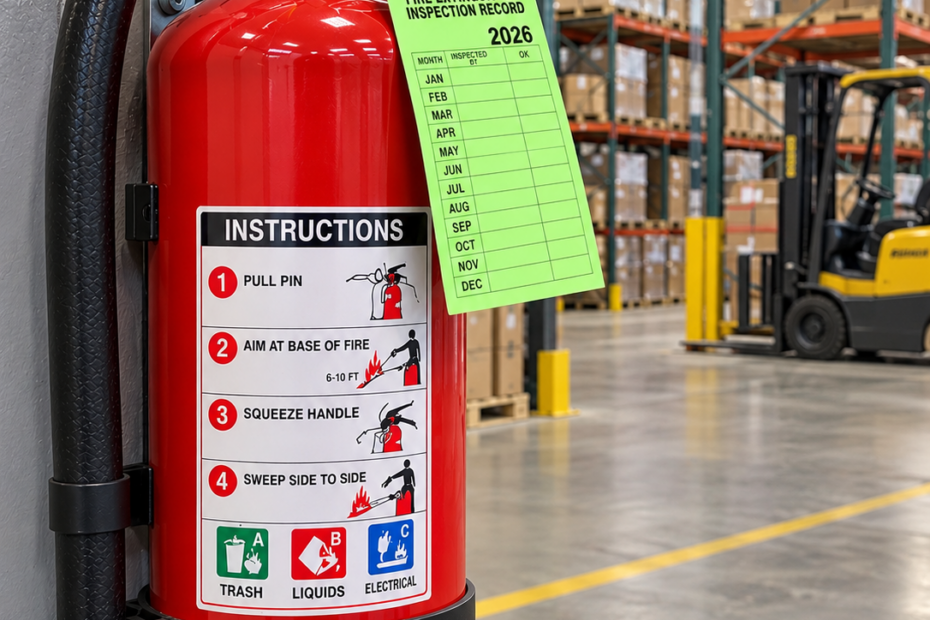
No. Albuquerque Fire Rescue does not refill or replace fire extinguishers. The City of Albuquerque confirms this on its official Fire Rescue FAQ page. If your business has a discharged extinguisher, an expired annual service tag, or equipment that needs maintenance, contact a qualified commercial fire extinguisher service provider rather than taking the unit to a fire station.
Fire departments and commercial extinguisher service companies have different responsibilities. Firefighters respond to emergencies, while fire prevention personnel help enforce fire safety requirements. Professional extinguisher service companies perform the maintenance, recharging, testing, and documentation needed to keep commercial equipment ready for use.
For Albuquerque restaurant owners, property managers, and other business operators, knowing whom to call can prevent unnecessary delays, especially when an extinguisher has been used or needs immediate attention.
Do Albuquerque Fire Stations Recharge Commercial Fire Extinguishers?
Albuquerque Fire Rescue does not offer fire extinguisher refilling or replacement through its public services.
The city’s official Albuquerque Fire Rescue Frequently Asked Questions page specifically addresses extinguisher replacement, refilling, and disposal. It states that the department does not provide those services.
That means business owners should not plan to visit a neighborhood fire station to have a commercial extinguisher recharged.
A fire station may be an appropriate place to seek certain types of public safety information, but that does not make it a commercial fire protection service facility.
If an extinguisher at your business has been discharged, the next step is to arrange an evaluation by a qualified service provider. Depending on the unit’s type and condition, it may need recharging, additional maintenance, or replacement.
Brazas Fire provides commercial fire extinguisher inspections, maintenance, and recharging in Albuquerque for businesses that need these services.
What Does Albuquerque Fire Rescue Do Instead?
Albuquerque Fire Rescue provides emergency response, fire prevention, public education, and fire code enforcement services.
Its responsibilities are different from those of a company that maintains commercial extinguishers.
Fire prevention personnel may examine fire safety conditions during inspections and identify problems involving extinguishers, such as inaccessible equipment, missing documentation, or overdue maintenance.
However, a fire department inspection is not the same as a professional extinguisher maintenance visit.
For example, a fire inspector may notice that an extinguisher’s annual service tag is overdue. That finding does not mean the inspector will recharge the extinguisher or issue a new maintenance tag.
The business remains responsible for arranging the necessary corrective work.
Can the Fire Marshal Inspect an Extinguisher Without Recharging It?
Yes. An inspection conducted for code enforcement can include checking whether required fire protection equipment is present, accessible, and properly maintained.
The inspector’s role is to evaluate compliance and identify deficiencies, not necessarily to perform the maintenance needed to correct them.
A commercial service provider performs the applicable extinguisher maintenance and supplies the corresponding service documentation.
This distinction matters when a business receives a fire inspection report. An instruction to correct an extinguisher deficiency should not be interpreted as an offer of repair or recharge service from the fire department.
Who Can Recharge and Tag Commercial Fire Extinguishers in New Mexico?
Commercial extinguisher servicing in New Mexico is regulated through the state’s certificate-of-fitness requirements.
Under 10.25.2.8 of the New Mexico Administrative Code, regulated fire protection equipment work requires the applicable certificate of fitness. The rule specifically identifies portable fire extinguishers as a separate discipline.
The requirements cover activities including maintenance, servicing, recharging, and tagging.
A business should therefore choose a provider with the appropriate authorization for portable fire extinguisher work rather than assuming that any general maintenance contractor can perform the service.
New Mexico’s rules also address whether an extinguisher service operation works from a fixed location, provides mobile recharging, or both. They require commitments concerning trained personnel, proper tools, service documentation, and suitable materials.
These requirements help distinguish professional extinguisher maintenance from simply adding pressure or replacing a tag.
How Can You Check a Provider’s Qualifications?
Before scheduling service, ask whether the company holds the appropriate New Mexico certificate of fitness for portable fire extinguishers.
You can also ask whether the provider performs the specific service your equipment needs.
For example, a company that offers annual maintenance may not necessarily perform every type of cylinder testing or service every extinguisher model.
The New Mexico State Fire Marshal’s Office provides certificate-of-fitness information and resources for checking fire protection service requirements.
Ask what documentation will be provided after the work is completed. Service records are important when preparing for future inspections and tracking the condition of equipment throughout a facility.
Does Your Fire Extinguisher Need Recharging, Annual Maintenance, or Replacement?
Not every extinguisher problem requires the same service.
A discharged extinguisher may need recharging, while an unused extinguisher with an overdue annual maintenance tag may need a scheduled examination. A damaged or nonrechargeable unit may need replacement.
The following comparison can help business owners identify the next step.
Extinguisher condition | What may be needed | Recommended next step |
Used or partially discharged | Professional evaluation and recharge if serviceable | Arrange prompt service and restore required protection |
Annual maintenance tag is overdue | Annual maintenance examination and documentation | Schedule a qualified service provider |
Pressure gauge indicates a problem | Evaluation, maintenance, recharge, or replacement | Do not assume the unit is ready for use |
Hose, handle, cylinder, or other component is damaged | Professional evaluation and possible repair or replacement | Address the damaged unit promptly |
Internal maintenance or pressure test is due | Required examination or hydrostatic testing | Confirm the appropriate service for the extinguisher type |
Nonrechargeable extinguisher has been used | Replacement | Obtain a suitable replacement unit |
Extinguisher is missing or inaccessible | Correct placement or replace missing equipment | Restore required coverage and accessibility |
The correct service depends on the extinguisher’s design, manufacturer instructions, condition, and applicable standards.
What Is Fire Extinguisher Recharging?
Recharging restores the extinguishing agent and, where applicable, the pressure needed for a serviceable rechargeable extinguisher to operate.
It is not simply a matter of pumping air into a cylinder.
The service must use the correct extinguishing agent, components, equipment, and procedures for that particular model.
A technician may also identify damage or other conditions that make recharging inappropriate.
An extinguisher that cannot be safely returned to service must be replaced.
Is Recharging the Same as Annual Fire Extinguisher Maintenance?
No. Recharging and annual maintenance are different activities, although both may be necessary during the same service visit.
Annual maintenance involves the required examination of an extinguisher to determine whether it remains suitable for service. The technician checks the applicable components and conditions and documents the maintenance performed.
Recharging is required when a rechargeable unit has discharged or when other conditions call for it.
A unit can be due for annual maintenance without needing a recharge. Likewise, a recently maintained extinguisher may need immediate attention after being used.
An annual maintenance tag does not guarantee that an extinguisher remains ready for use indefinitely.
What Should You Do After a Commercial Fire Extinguisher Is Used?
Once an extinguisher has been discharged, even briefly, do not assume it is ready for another emergency.
The appropriate response depends on whether a fire is still active and whether the extinguisher can be returned to service.
1. Address Any Continuing Fire Emergency
If a fire is ongoing or conditions remain dangerous, evacuate as appropriate and call 911.
Do not delay emergency response while trying to arrange extinguisher service.
2. Identify the Extinguisher That Was Used
Record its location, type, and identifying information so the service provider can determine what equipment needs attention.
A Class ABC dry chemical extinguisher and a Class K wet chemical extinguisher are designed for different hazards and require different servicing procedures.
3. Arrange Professional Service or Replacement
A rechargeable extinguisher should be evaluated by an appropriately authorized service provider.
If the unit is nonrechargeable or cannot be safely serviced, it must be replaced with suitable equipment.
Do not attempt to recharge a commercial extinguisher using ordinary compressed air or equipment not intended for that purpose.
4. Maintain Required Fire Protection
If an extinguisher is removed from service, determine whether a suitable replacement is needed immediately to maintain the required level of protection.
The replacement must be appropriate for the hazards in that location.
For workplaces subject to OSHA’s portable extinguisher requirements, 29 CFR 1910.157 addresses extinguisher inspection, maintenance, accessibility, and related employer responsibilities.
5. Keep the Service Documentation
After the extinguisher is serviced or replaced, update the facility’s equipment records.
Recordkeeping helps the business track maintenance dates, identify recurring problems, and respond to future inspection questions.
What Happens if a Restaurant Uses Its Class K Fire Extinguisher?
Consider an Albuquerque restaurant where an employee uses a Class K extinguisher during a cooking-related fire.
After the emergency is resolved, the manager discovers that the extinguisher has been discharged. The fact is, it can no longer be relied upon for another incident.
Taking it to a fire station will not solve the problem because Albuquerque Fire Rescue does not provide extinguisher refilling.
The restaurant should arrange professional evaluation and restore the required Class K protection.
A Class K extinguisher uses a wet chemical agent designed for commercial cooking hazards involving oils and fats. It is not interchangeable with a standard ABC extinguisher in every application.
The manager should also determine whether the kitchen hood fire suppression system activated or was otherwise affected.
The portable Class K extinguisher and the kitchen hood fire suppression system are separate pieces of fire protection equipment. Servicing one does not automatically restore the other.
If the hood system discharged, it may also need professional inspection, recharging, and restoration before cooking operations resume.
Businesses can learn more about commercial kitchen hood fire suppression systems and how they protect cooking operations.
What if the Extinguisher Has an Expired Tag but Has Never Been Used?
An overdue annual maintenance tag does not automatically mean an extinguisher needs recharging.
For example, imagine an Albuquerque office manager reviewing fire protection equipment before a scheduled building inspection.
The extinguishers appear undamaged, their pressure gauges are in the indicated operating range, and none has been discharged. However, the annual maintenance dates are overdue.
The manager should arrange the required professional maintenance rather than assume that every extinguisher needs a refill.
A qualified provider can examine the units, identify any additional service requirements, and document completed maintenance.
A pressure gauge showing the proper range is helpful, but it does not replace an annual maintenance examination.
Can Employees Perform Monthly Fire Extinguisher Checks?
Yes. For workplaces covered by OSHA’s portable extinguisher provisions, employers must visually inspect portable extinguishers monthly and ensure applicable annual maintenance checks are performed.
Routine visual checks can help identify whether an extinguisher is missing, blocked, visibly damaged, or showing an abnormal pressure indication.
These checks are not equivalent to regulated professional maintenance or recharging.
Businesses should maintain a process for reporting problems promptly rather than waiting for the next annual service visit.
Can Every Commercial Fire Extinguisher Be Recharged?
No. Some extinguishers are designed to be recharged, while others are nonrechargeable.
Even a rechargeable extinguisher may need replacement if it is damaged, fails an applicable test, or no longer meets service requirements.
Different extinguisher types also have different maintenance needs.
A typical office may use multipurpose ABC dry chemical extinguishers. Restaurants may need Class K extinguishers near commercial cooking operations. Other facilities may use carbon dioxide or specialized extinguishing agents for particular hazards.
The service provider needs to identify the equipment before determining the correct work.
Some extinguisher types also require internal maintenance or hydrostatic testing at specified intervals. Those requirements are separate from routine monthly checks and annual maintenance.
A professional service provider should be able to explain whether an extinguisher can be recharged, needs additional testing, or should be replaced.
How Do You Choose a Commercial Fire Extinguisher Service Company in Albuquerque?
The best provider is one that can evaluate your equipment, perform the necessary authorized services, and explain what was completed.
Before scheduling, ask several practical questions.
- Does the company hold the appropriate New Mexico authorization for portable fire extinguishers? Confirm that its credentials cover the work being requested.
- Can it service your extinguisher types? Identify whether you have ABC, Class K, carbon dioxide, or other specialized equipment.
- Does it provide recharging and annual maintenance? These are different services, and your facility may need both.
- Can it evaluate damaged or overdue extinguishers? A provider should explain whether maintenance, testing, or replacement is appropriate.
- What documentation will you receive? Ask about maintenance tags, service records, and reports identifying equipment that needs attention.
- How will required coverage be maintained? Discuss replacement equipment if a unit must be removed from service.
For a business with many extinguishers, keeping an equipment inventory can make the process easier. Record each unit’s location, type, and service history.
A restaurant, office building, warehouse, and automotive facility may all have different extinguisher needs. Choosing a provider familiar with the equipment and hazards at your property helps ensure the service matches the situation.
For more information about local service options, see Where Can I Get Commercial Fire Extinguishers Serviced and Tagged in Albuquerque?.
Frequently Asked Questions
Will Albuquerque Fire Rescue Refill My Fire Extinguisher for Free?
No. Albuquerque Fire Rescue states that it does not refill fire extinguishers. Businesses should contact a commercial extinguisher service provider to ask about recharging, maintenance, or replacement.
Can I Drop Off a Commercial Fire Extinguisher at an Albuquerque Fire Station?
Do not take an extinguisher to a fire station expecting it to be refilled or replaced. Albuquerque Fire Rescue does not provide those services. Contact an authorized commercial provider and confirm its service arrangements before transporting equipment.
Does the Fire Marshal Put Annual Service Tags on Extinguishers?
Fire prevention personnel may inspect extinguishers for compliance, but that is different from professional annual maintenance and tagging. Businesses should arrange regulated maintenance through a properly authorized service provider.
Do I Need to Recharge an Extinguisher After Using It Only Once?
A rechargeable extinguisher that has been used should be removed from normal service and professionally evaluated for recharging or replacement. Even a brief discharge can affect its readiness for another emergency.
Can a Commercial Fire Extinguisher Be Recharged on Site?
Some qualified service companies provide mobile recharging services, while others operate from fixed facilities. New Mexico’s certificate-of-fitness rules recognize both types of operations. Ask the provider whether your particular extinguisher can be serviced at your location.
Is It Better to Recharge or Replace a Fire Extinguisher?
That depends on whether the extinguisher is rechargeable, its condition, age, service requirements, and the cost of restoring it safely. A qualified service provider can explain which option is appropriate.
Commercial Fire Extinguisher Recharging and Service in Albuquerque
If your business needs an extinguisher recharged, inspected, tagged, or replaced, the correct next step is to contact a commercial fire protection company rather than visit a fire station.
Brazas Fire provides commercial fire extinguisher sales, annual inspections and certification, recharging, maintenance, and related services for businesses in Albuquerque, Rio Rancho, Santa Fe, and other New Mexico communities.
Whether you manage a restaurant, office, warehouse, retail store, or other commercial property, properly maintained extinguishers are an important part of keeping your fire protection equipment ready for use.
Learn more about Brazas Fire’s commercial fire extinguisher services or call 505-889-8999 to discuss your equipment and schedule service.
Brazas Fire
2900 Wellesley Dr. NE
Albuquerque, NM 87107
Phone: 505-889-8999
Getting the right extinguisher service starts with knowing who performs the work. Albuquerque Fire Rescue handles public fire safety and emergency responsibilities; qualified commercial service providers handle the maintenance, recharging, and documentation your business needs.