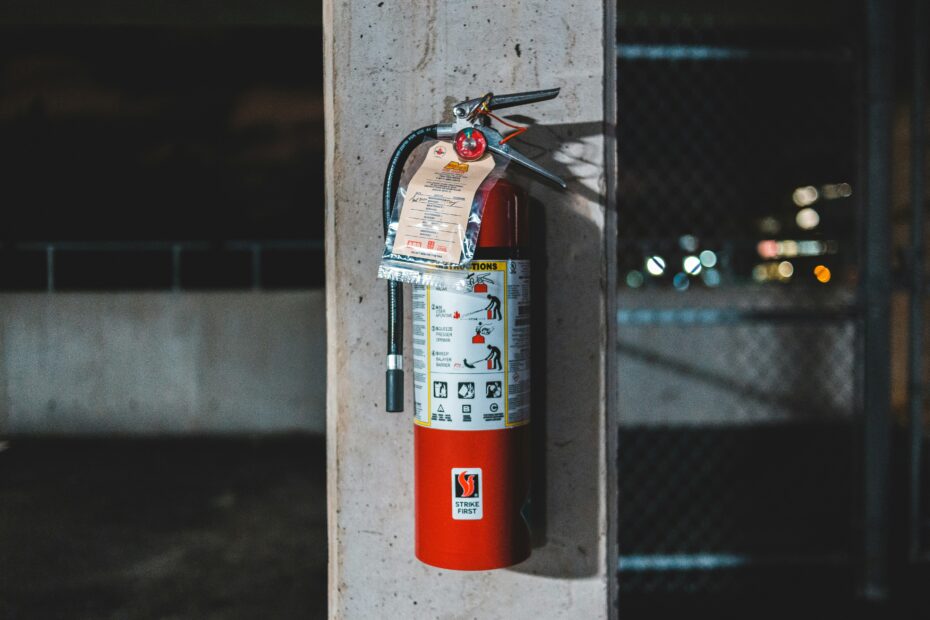
Albuquerque businesses can have commercial fire extinguishers inspected, serviced, recharged when needed, and certification-tagged by a qualified fire protection provider. Brazas Fire provides commercial fire extinguisher sales and service from its Albuquerque location at 2900 Wellesley Dr. NE. The company services multiple extinguisher types and brands and lists annual inspection, recharge, applicable internal maintenance and hydrostatic testing, and certification tagging among its services.
The important point is that “getting a tag” is not simply having a new label attached to an extinguisher. In New Mexico, inspecting, maintaining, servicing, recharging, or tagging portable fire extinguishers is regulated work. The extinguisher must be evaluated and any required service addressed before the service documentation means what a business owner or facility manager expects it to mean.
Where Can Albuquerque Businesses Get Fire Extinguishers Serviced and Tagged?
Brazas Fire provides Albuquerque fire extinguisher sales, inspection, maintenance, and service for businesses and commercial facilities. Its current service page states that it services any brand of extinguisher used by Albuquerque and New Mexico businesses and lists ABC, CO2, Halon, Halotron, Class K, and water extinguishers.
That makes the service relevant to a wide range of properties, including offices, warehouses, restaurants, commercial kitchens, schools, industrial facilities, automotive operations, and other buildings with portable fire extinguishers. The right service for each unit still depends on the extinguisher type, condition, service history, and applicable requirements.
If your concern is an expired or missing tag, a discharged unit, an upcoming inspection, or a group of extinguishers that are due for annual service, call Brazas Fire at 505-889-8999 to discuss the equipment and schedule service.
What Does “Serviced and Tagged” Actually Mean?
A tag is documentation of service; it is not a substitute for the service itself. A qualified technician first evaluates the extinguisher and determines what work is required. Depending on the unit, that may mean annual maintenance, recharge, repair or replacement of a damaged component, internal maintenance, hydrostatic testing, or replacement of the extinguisher.
Brazas Fire’s current service page states that after inspection and servicing, a certification tag is provided. For a facility manager, the useful way to think about the sequence is:
Step | What It Means |
1. Evaluate | Identify the extinguisher, condition, service history, visible damage, pressure/status, and applicable maintenance needs. |
2. Service as required | Complete the maintenance, recharge, repair, testing, or other work that applies to that unit. |
3. Document | Apply or update the appropriate service/certification documentation when the extinguisher is returned to service. |
4. Retain records | Keep current service information available for the business’s fire-protection records and inspections. |
This distinction matters because an expired tag tells you that the documentation needs attention, but it does not tell you by itself what the extinguisher needs mechanically. One unit may simply be due for annual maintenance, while another may have been partially discharged or may be due for a different type of service.
Who Is Allowed to Service and Tag Fire Extinguishers in New Mexico?
New Mexico regulates this work through its certificate-of-fitness rules. Under 10.25.2 NMAC, the rule applies to fire-protection installation, maintenance, and inspection companies operating in the state. Section 10.25.2.8 states that a person may not install, inspect, maintain, service, tag, or repair fire-protection equipment or systems without the applicable certificate of fitness. Portable fire extinguishers are specifically listed as one of the covered disciplines.
For a business owner or property manager, that creates a practical provider-selection question: do not choose a company merely because it can sell you a tag or says it works on extinguishers. Confirm that the personnel and company performing regulated work have the qualifications required for the service being performed.
The New Mexico rule also addresses portable-extinguisher service operations, including trained personnel, service documentation, proper tools, recharging materials, and manufacturer-recommended replacement parts or specifically listed parts. The exact requirements for a property can also involve the authority having jurisdiction (AHJ), adopted fire code, NFPA standards, and manufacturer instructions.
Is a Monthly Fire Extinguisher Check the Same as Annual Professional Service?
No. Routine visual inspections and professional maintenance are different activities. A business’s monthly inspection process is intended to catch obvious problems such as an extinguisher being missing, obstructed, damaged, or showing an abnormal pressure indication. Professional maintenance goes further and evaluates the extinguisher according to the applicable service requirements.
Brazas Fire’s Company Knowledge Base separates these responsibilities as monthly visual inspections and annual professional inspection. NFPA 10 materials likewise distinguish recurring inspections from maintenance. That is why completing a monthly visual check does not replace the annual professional service that may be required.
If you need a detailed explanation of the process, Brazas Fire also has a resource on what occurs during a fire extinguisher inspection or maintenance visit.
Does Every Annual Service Mean the Extinguisher Must Be Recharged?
No. Annual maintenance and recharge should not be treated as the same thing. A rechargeable extinguisher that has been used or discharged needs appropriate servicing and recharge before being returned to service. Recharge may also be indicated by the extinguisher’s condition or service requirements, but an annual visit does not mean every extinguisher in the building automatically receives the same recharge procedure.
Brazas Fire states that it can refill and recharge extinguishers that have been discharged. If you are deciding whether a particular unit should be recharged or replaced, its condition and type matter. Brazas Fire’s related article on recharging versus replacing a used fire extinguisher provides additional context.
What About 6-Year Maintenance and Hydrostatic Testing?
Longer-interval maintenance is another reason not to reduce fire-extinguisher service to “renewing the tag.” Brazas Fire lists 6-year or 12-year internal maintenance and hydrostatic testing as applicable, but those numbers should not be applied blindly to every extinguisher.
NFPA 10 materials show that internal-maintenance and hydrostatic-test intervals vary by extinguisher type. For example, certain rechargeable dry-chemical and halogenated-agent extinguishers use different intervals from carbon-dioxide and water-type extinguishers. Manufacturer instructions and the applicable standard should be used for the specific unit.
A qualified service provider should therefore identify the extinguisher and its service history before deciding what longer-interval work is due. The date on an annual service tag is only one piece of that history.
What Should a Technician Evaluate Before Applying a Service Tag?
The exact maintenance procedure depends on the extinguisher, but the service decision can include its physical condition, pressure or charge status, mechanical components, evidence of use or discharge, service history, and whether additional maintenance or testing is due. Damaged components may need to be replaced, and some extinguishers may be better replaced than returned to service.
This is also why a business with a mixed extinguisher inventory should not assume every unit will receive identical work. An office may have ABC dry-chemical extinguishers, while a commercial kitchen may also have a Class K extinguisher. Other facilities can have CO2, clean-agent, water, or specialty units. Brazas Fire’s current page specifically lists ABC, CO2, Halon, Halotron, Class K, and water extinguishers among the types it services.
An Expired Tag Is a Symptom, Not a Diagnosis
Consider an illustrative facility with six portable extinguishers. Several annual-service tags are approaching or past their service date, one ABC extinguisher has been partially discharged, and the commercial kitchen has a Class K extinguisher. The manager’s problem is not solved by ordering six identical replacement tags.
The useful process is to identify the units and their locations, note obvious use or damage, contact a qualified portable-extinguisher service provider, and have each extinguisher evaluated. Some may need annual maintenance and updated documentation. The discharged unit may need recharge or another service decision. A unit due for internal maintenance or hydrostatic testing may require additional work. A damaged or unsuitable unit may need replacement.
This example is a decision framework, not a description of a specific Brazas Fire customer. It shows why the tag should follow the evaluation rather than drive it.
How Should I Prepare to Schedule Commercial Fire Extinguisher Service?
You do not need to diagnose every extinguisher before calling. It can, however, make scheduling easier if you know roughly how many units you have, where they are located, what types are visible on the labels, whether any have been used, and whether any tags appear overdue. For a multi-location business, identifying which site needs service can also help organize the request.
These are practical preparation steps, not a Brazas Fire requirement. The technician still needs to evaluate the actual equipment.
What Should I Ask a Fire Extinguisher Service Company Before Scheduling?
Question | Why It Matters |
Are you qualified for portable fire-extinguisher work in New Mexico? | New Mexico regulates inspection, maintenance, service, recharge, repair, and tagging through certificate-of-fitness requirements. |
Do you service my extinguisher types and brands? | A mixed commercial inventory may include ABC, CO2, Class K, water, clean-agent, or other units. |
Does the visit include annual maintenance and documentation? | You want the service scope clarified, not just a vague promise to ‘tag’ the units. |
Can you recharge or arrange required testing when indicated? | Some extinguishers need more than routine annual maintenance. |
What happens if a unit should be replaced? | Damaged, obsolete, nonrechargeable, or otherwise unsuitable units may require a replacement decision. |
What records or tags will be provided? | Documentation is part of maintaining an organized commercial fire-protection program. |
Can Brazas Fire Service Fire Extinguishers From Other Manufacturers?
Yes. Brazas Fire’s current Albuquerque fire-extinguisher page states that it provides service for any brand of fire extinguisher currently used by an Albuquerque or New Mexico business. The company sells commercial extinguishers from brands including Ansul, Badger, and Pyro-Chem and can order additional brands, but its service offering is not limited to those brands.
Frequently Asked Questions
Where can I get a commercial fire extinguisher tagged in Albuquerque?
Brazas Fire provides commercial fire-extinguisher inspection, maintenance, recharge, and certification-tagging services in Albuquerque. Its office is at 2900 Wellesley Dr. NE, Albuquerque, NM 87107, and the phone number is 505-889-8999.
Can I just get a new tag without having the extinguisher serviced?
A service tag should document the appropriate inspection or service; it should not be treated as a stand-alone label. New Mexico regulates the inspection, maintenance, servicing, recharging, repair, and tagging of portable fire extinguishers.
How often should a commercial fire extinguisher be professionally serviced?
Brazas Fire lists annual professional inspection/certification as part of its commercial extinguisher service. Monthly visual inspections are a separate routine responsibility. Additional internal maintenance or hydrostatic testing may be required at longer intervals depending on the extinguisher type and applicable requirements.
Does every extinguisher need 6-year and 12-year service?
No. Do not apply a single 6-year/12-year schedule to every extinguisher. Internal-maintenance and hydrostatic-test intervals vary by extinguisher type. The specific unit, manufacturer information, and applicable NFPA requirements should be checked.
Can a discharged commercial extinguisher be recharged?
Many rechargeable extinguishers can be recharged after use when their condition and type allow it. Brazas Fire provides fire-extinguisher recharging. A technician should evaluate the unit before deciding whether recharge, repair, testing, or replacement is appropriate.
Schedule Commercial Fire Extinguisher Service in Albuquerque
If your Albuquerque business has extinguishers with expired or approaching service dates, discharged units, damaged equipment, or an upcoming fire-safety inspection, the next step is to have the equipment evaluated by qualified fire-protection personnel.
Brazas Fire provides fire-extinguisher sales, annual certification, recharging, inspection, maintenance, and related commercial fire-protection services for Albuquerque and New Mexico businesses. Call 505-889-8999 or visit 2900 Wellesley Dr. NE, Albuquerque, NM 87107 to discuss your extinguishers and service needs.
Sources and Regulatory References
Company-specific service information was verified against Brazas Fire’s current Albuquerque Fire Extinguisher Sales and Service page. New Mexico provider-qualification information was verified against 10.25.2 NMAC – Certificates of Fitness. Technical background on portable-extinguisher inspection, maintenance, internal-maintenance, and hydrostatic-testing intervals was cross-checked against NFPA 10 development materials. Property-specific requirements can vary with the extinguisher, occupancy, manufacturer instructions, adopted code, and authority having jurisdiction.