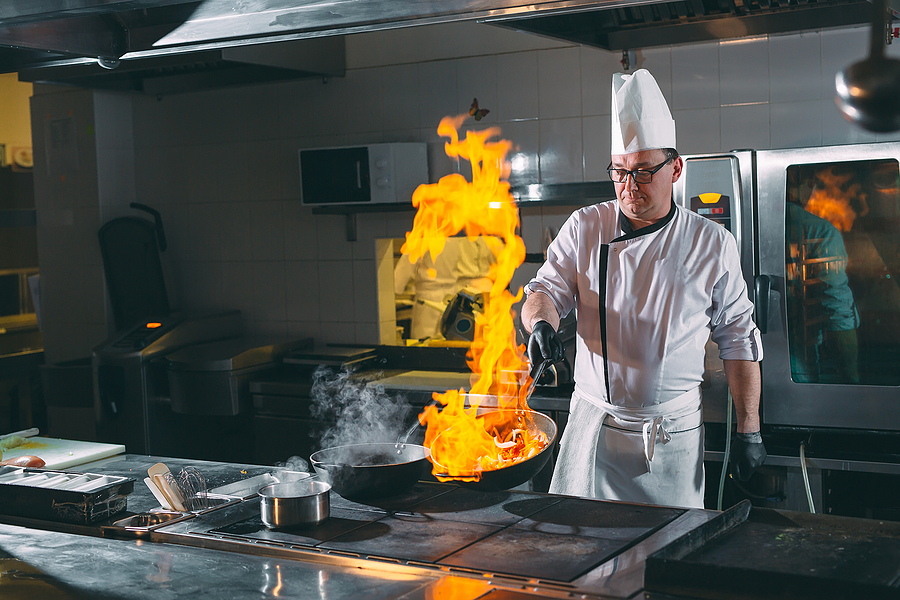
Food preparation occurs similarly in restaurants, kitchens in offices, and even industrial kitchens. But it also presents big dangers when not done safely.
In fact, the National Fire Protection Association NFPA states that cooking equipment is a “leading factor contributing to the ignition of fires in non-home structures”.
Safety precautions and compliance with NFPA specifications must be followed to help protect employees and property. Keep these important cooking safety workplace considerations in-mind per NFPA.
Install Adequate Fire Suppression Systems
A fire suppression system is the first line of defense in a fire emergency in the workplace.
NFPA 96: Standard for Ventilation Control and Fire Protection of Commercial Cooking Operations states that, “Commercial Cooking Operations shall have a fire suppression system that is maintained and operable.” Routine checks and maintenance on these systems are essential to have them prepared in the event of a fire.
Maintain Cleanliness
Maintaining a clean space in the kitchen is a basic way to avoid fires. Grease and food particles can accumulate and if ignited, so routine cleaning is critical.
NFPA 96 describes a number of standards related to the cleaning of exhaust systems, hoods, and grease filters. Cleaning schedules need to be put in place and followed so, and, where needed, professionals need to be hired to enforce compliance.
Proper Equipment Use and Maintenance
Make sure that all cooking equipment is functional.
As per NFPA 54: National Fuel Gas Code and NFPA 70: National Electrical Code, regular servicing and inspections of equipment is essential to avoid equipment failure which may result in a fire. On top of that employees should be trained in using equipment like stovetops, ovens, and deep fryers safely to avoid accidents.
Fire Extinguishers and Fire Safety Training
NFPA 10: Standard for Portable Fire Extinguishers outlines how the employer can choose, locate and maintain fire extinguishers within the work environment. Employees should be instructed on the proper use of fire extinguishers. The difference between a fire being minimally damaging and devastating can be as simple as knowing where fire extinguishers are located and having occasional fire drill.
Preventing Grease Fires
Grease fires can often be an issue in the kitchen. Staff should be trained to appropriately deal with such fires. The kitchen should be equipped with a class K fire extinguisher for cooking oil fires as mandated by NFPA 96. Water should never be used by employees to put out a grease fire because it will spread the fire. Otherwise they should use a fire blanket or a K class extinguisher .
Fire-Resistant Kitchen Design
Another aspect to keep in mind when designing a commercial kitchen is that of fire resistant materials and construction. NFPA 1: Fire Code states these need to be fire-rated walls, ceilings and floors in commercial kitchens. Designs for proper ventilation and exhaust systems should also account for preventing the spread of fire and smoke.
Safe Cooking Practices
Training of employees is an important measure to ensure safe cooking practices. Workers should be trained on the hazards of cooking and correct cooking procedure should be stressed. Burns and accidents can be avoided through common sense precautions such as turning pot handles inward and wearing oven mitts .
Supervision and Monitoring
Close supervision is essential for work place kitchen safety. Designate a responsible staff member to be in charge of cooking when it is a busy time. Employ detection and monitoring systems, such as smoke detectors and heat sensors.
Emergency Procedures
All workplaces also have emergency protocols in place. All employees should be aware of what to do if a fire breaks out such as the evacuation routes and assembly point. Frequent fire drills will help everyone become accustomed to this procedure.
Regular Inspections and Maintenance
Lastly, as dictated by NFPA, all fire safety equipment and systems must be regularly inspected and maintained. These are fire extinguishers, fire alarms, sprinklers, and more generally emergency lighting. Maintaining these systems is critical to ensure a quick and effective response in the event of a fire emergency.
Brazas Fire Can Help!
A workplace must also remain safe from cooking fires as the utmost priority is the employees and safeguarding such property. Employers can minimize workplace fires by following suggestions in this article and NFPA guidelines.
Focus on safety through training, maintenance and preparation, and you will have a safe place to work in the kitchen. Allow Brazas Fire to safeguard your establishment from the perils of cooking fires.
Mistakenly, the likelihood of cooking related fires may also be a false assumption if you’re not equipped with a full kitchen. As a full-service fire protection company, we are able to design a complete fire protection plan for your facility, regardless of its size or the hazards you are dealing with.
Call today at 505-889-8999 or feel free to visit our website for a complete list of services and a free estimate online.
We look forward to helping you.