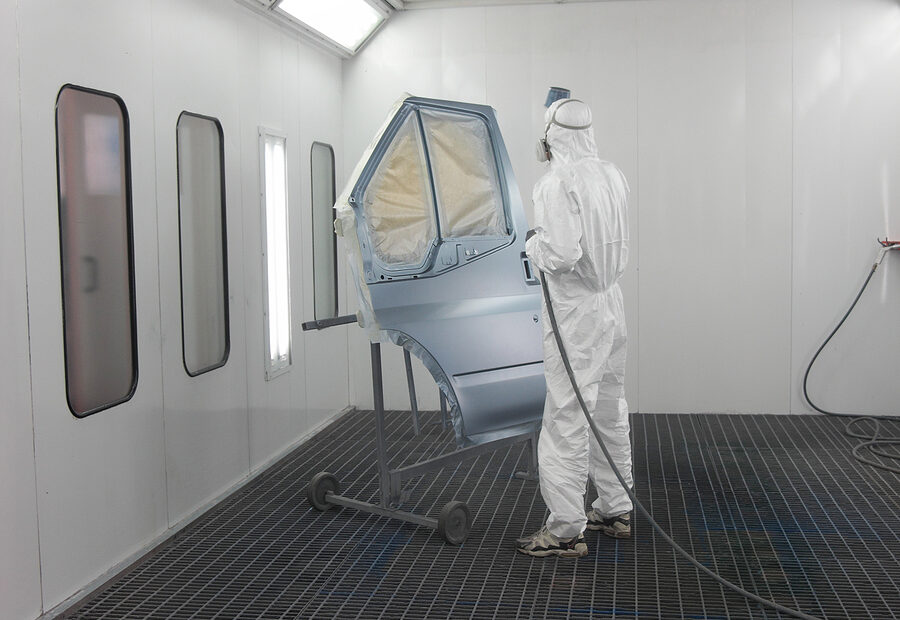
Spray booth operations are always susceptible to the potential danger of fires since flammable substances, chemicals, and solvents are used in painting processes.
If not kept in check, a spark or malfunction could create an extremely hazardous situation. Enter fire suppression systems.
By covering your paint booth with a reliable fire suppression system, you’re protecting both your employees and the capital you’ve put into it – all while staying within code. In this blog, we’re going to look at how fire suppression systems function and why they are so vital, as well as the different types of such a system that you can choose from for your spray booth.
Why Fire Suppression Systems Are Essential for Paint Booths
Before I explain how fire suppression systems actually operate, I want to go over why they are so important for your paint booth.
Due to the presence of flammable substances (e.g. paint, solvents and thinners) as well as the chance for static electricity or electrical defect being sparked fire within them is a high concern area.
In a flash fire, the destruction to the booth and facility surrounding it, not to mention very expensive equipment can be devastating.
What’s more, is that the welfare of those employees whose job roles require them to work inside or in close proximity to the paint booth is compromised. By installing fire suppression systems in your paint booth, you can prevent these risks and quickly contain or extinguish the fires as they break out.
It is also mandated by law to comply with the fire safety laws. Rules and regulations from safety agencies such as OSHA and NFPA are very specific about fire standards for spray booth use. The consequences for not reaching these standards can be a financial penalty, being closed down or even the ultimate, an avoidable tragedy.
How Fire Suppression Systems Operate in Paint Booths
Fire suppression systems are meant to find and smother flames before they have a chance to take hold. Fire Suppression Systems in Paint Booths Fire suppression systems can be part of an overall fire suppression plan that includes a paint booth, but it may also incorporate other systems such as general ventilation and airflow control.
Here’s an explanation of how these systems operate:
- Fire Detection: The first element in a fire suppression system is detection of a fire. Contemporary fire suppression systems rely on sensors (e.g. heat detectors or flame sensors) for detecting the initiation of a fire. The sensors are spaced in the paint booth so that they are positioned to sense a hazardous condition regardless of whether such condition is in the air filtration system, near the exhaust fans or within the paint area.
- Heat Detector: These are activated based on temperature rise over a threshold.
- Flame Sensing Devices: This equipment senses the presence of flame and can be used to rapidly turn on a suppression system.
Automatic System Activation
The fire suppression system activates on its own after detecting a fire. This generally requires that some fire-suppressing agent (e.g., water mist, foam or chemical fire suppressant) is discharged into the booth.
The agent used is specifically picked for the kind of fire hazard in the booth—some chemicals work better on fires started by flammable liquids, while others are made to put out electrical fires.
- Agent Discharge: The proper fire-suppressing agent is automatically released to keep fires at bay.
- Auto Response: Once the fire sensor is determined, this feature automatically stops the fire before it reaches even small explosions.
Shutting Down Airflow
There must be adequate airflow for several reasons in a spray booth: to protect the air quality inside, and to minimize overspray.
Sounds like a good way to hide your flame, but in the case of an actual fire and unlimited airflow, it could potentially cause spread or ride the fuel instead with new oxygen.
Sprinklers are commonly installed with the massive hood-fan to automatically stop air flow in case of a fire. This keeps the fire confined to a smaller space, and the suppression system can work better.
Airflow is cut off: When the airflow to the fire is blocked, it helps put out the flames and decreases the oxygen that fuels them.
Containment: By closing off ventilation, the fire is contained within the booth and risk to other areas of facility is minimized.
Manual Override and Emergency Controls
The majority of fire suppression systems also feature manual override controls so that workers can activate the system if they see a fire before the automatic sensors go off. Such controls may be located proximate the exits to the spray booth or be conveniently distributed throughout the building.
- Manual Activation: If the automated system does not sense a fire, emergency controls enable workers to manually launch the suppression systems.
- Emergency Switch Off: Extra gas release mechanisms provide for the fast switch off of all units and systems in case of emergency.
Types of Fire Suppression Systems for Paint Booths
There are many kinds of fire suppression systems to choose from, all designed for different types of fires and risk. Some of the most popular types that are commonly used in paint booths include:
Water Mist Systems
Water mist systems are intended to discharge a fine water spray that cools the fire and reduces the heat source.
These systems are effective in a paint booth because the mist is so fine it will knock down a fire without creating water damage on expensive equipment or the paint job.
Cooling Effect: Mist cools the fire to minimize damage while flushing away the fire’s fuel source.
Low Damage: Water Misting Systems cause less damage due to equipment and paint than traditional sprinkler systems.
Foam Fire Suppression Systems
Foam suppression systems can attack fires where flammable liquids, such as paints and solvents, are in use. These systems operate by smothering the fire with a layer of foam that starves the flames of oxygen, extinguishing it.
- Deprived of Oxygen: The fire is blanketed by foam, denying it oxygen to spread.
- Pliable Liquids: Foam based systems can be suitable for pliable fires, which makes then highly useful where flammable liquids are used such as in paint booths.
Dry Chemical Systems
Dry chemical fire suppression extinguishes fires using a rapid-acting powder. These systems are on the spot in combating with fires, which include flammable liquids and electrical gear. The dry chemical layer smothers the fire and inhibits recurrance.
- Quick Suppression: Dry chemicals suppress fires with the speed and efficiency reducing damage.
- Electrical fires: These are suitable for locations that contain flammable liquids as well as electrical equipment.
CO2 Systems
CO2 fire suppression systems work by smothering the fire, displacing the oxygen in the air around the area on fire and preventing continued burning. They see use mostly in small, closed environments where human exposure is minimal — because CO2 can be dangerous at sufficiently high levels.
- Depletion of Oxygen: CO2 is designed to smother fire by cutting off the oxygen supply in a space or room.
- Non-Destructive: CO2 is a clean agent that won’t damage equipment or painted surfaces, and leaves no residue behind on sensitive devices.
Complies with NFPA and OSHA Fire Safety Standards
But as well as selecting the right fire suppression system, your paint booth needs to meet fire safety standards laid down by the National Fire Protection Association (NFPA) and Occupational Safety and Health Administration (OSHA).
Both organizations offer guidance on safe paint booth operation, as well as how to correctly install and maintain fire suppression equipment.
- NFP A 33: This standard covers the fire safety requirements for spray application of flammable or combustible materials, including installation of fire protection systems.
- OSHA 1910.107 OSHA recommends use of a fire suppression system, proper ventilations and other safety equipment as utilized by professionals.
Through maintaining your fire suppression satisfaction standards, you can ensure that your business is protected and escape costly fines or legal charges.
Why Brazas Fire Services Makes Your Best Choice for Fire Suppression Solutions
Brazas Fire manufactures high-quality paint booth fire protection systems. Here’s what you can expect when selecting Brazas Fire as your fire protection expert:
Expert Consultation: Brazas Fire will help you select the proper fire suppression system for your booth configurations and specific fire risk.
Bespoke Solutions: Brazas Fire provides a personalized fire suppression system, designed to accommodate the dimensions of your booth, layout and materials you use.
Regulatory Compliant: Every Brazas Fire system complies with NFPA & OSHA codes and regulations.
Continuously care: Brazas Fire provides maintenance, tests and protection for the life of your fire suppression system.
Final Thoughts
The most important part of a paint booth system is the fire suppression system. It’s main function to keep you and your employee’s safe.
A good quality fire suppression system is an investment every business owner should make in order to avoid costly damage, loss of business and even possible OSHA and NFPA violations. For professional consultation and high quality fire suppression products, talk to the professionals at Brazas Fire – we are the top specialists in spray booth safety.