Fires in kitchens can pose a severe threat to individuals and property alike.
All fires require three different elements for them to continue burning: fuel, oxygen, and heat. In this case, fats/grease/oil are the fuel and will burn extremely hot, spreading quickly (even more quickly if you throw water on them).
Therefore, each kitchen must be equipped with a specially designed kitchen hood fire suppression system to detect and help extinguish any potential kitchen fires.
Be sure to learn about the operation and maintenance of kitchen fire suppression systems as it can be the difference between a small loss and a significant loss. We will outline for you the components, operation, and reason for having a kitchen hood fire suppression system and what you must know to be compliant with current fire codes.
What is the Purpose of a Kitchen Hood Fire Suppression System?
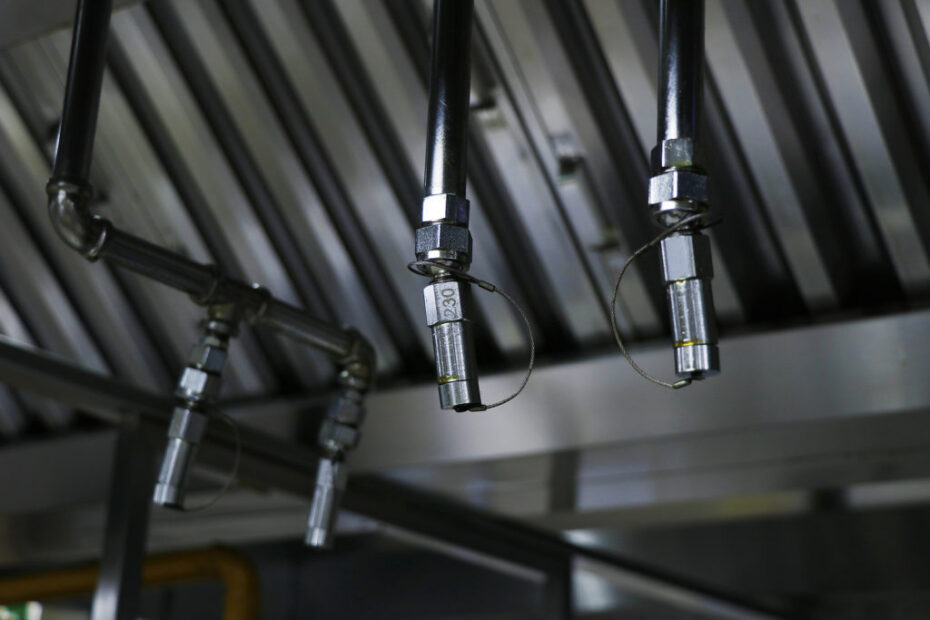
Kitchen hood fire suppression systems will assist in preventing kitchen fires from becoming a more significant problem, as these systems are installed directly above the individual cooking appliances/stations and will help contain the fires to a limited area.
What are the Components of a Kitchen Hood Fire Suppression System?
There are four primary components that comprise each kitchen fire suppression system:
- Kitchen hood
- Fire suppression agent stored in a cylinder
- Supply pipe
- Automatic/manual activation system
Similar to the operation of a sprinkler system, a fire suppression system will activate when heat or fire is detected, but may also need to be manually activated if a fire occurred before sufficient heat could be detected.
Upon activation, the kitchen hood fire suppression system will not use water to extinguish the fire. Instead, a specially formulated fire suppressing agent will be discharged through the nozzles of the kitchen hood. The agent used for the extinguishment process works by preventing the re-ignition of the fire through saponification, which occurs when the fire suppressing agent combines with grease and creates a “soapy,” solid layer that blocks the oxygen from coming into contact with the fuel (the grease).
When a kitchen fire is extinguished using a kitchen hood fire suppression system, the gas control valve supplying gas to the cooking appliance will automatically shut off to cut off the fuel supply to the fire or to deny access to other fuel sources. Additionally, the electrical power to the cooking appliance will be cut off to eliminate any chance of a spark, thus eliminating the potential risk of electric shock.
Once the fire has been extinguished, the fans located in the kitchen hood will automatically activate and remove any remaining smoke. The reason that fires in the kitchen should never be extinguished using a standard dry chemical fire extinguisher is due to the exceptionally high temperatures at which oils and grease burn. These types of fire can only be extinguished by using a K-1 Agent to create a sufficient cooling effect to prevent the likelihood of a relight after the fire has been extinguished.
Why Are Kitchen Hood Fire Suppression Systems So Important in Commercial Kitchen?
Fire extinguishing systems installed in commercial/industrial kitchens will also be installed in food trucks for the purpose of preventing fires from occurring. These systems have been specifically designed to extinguish fires without damaging kitchen equipment, produce, and/or food.
The cost to repair a fire, structurally, will far exceed that of the cost to avoid having a fire. Fire damage caused by a kitchen fire can create a significant amount of costs to repair and create a risk for injuries to customers. Fire kitchen hood suppression systems are designed to limit damage to one cooking surface in the kitchen.
Most importantly, if a fire were to occur, you would not need to shut down your kitchen; rather, you could simply clean up after the incident, as only one cooking station and the produce on that cooking station would be affected.
Prior to purchasing a fire suppression system for your kitchen, consult with a fire professional to determine your options. Fire suppression systems must meet the required local fire codes and must be specifically designed for the kitchen where they will be installed. It is essential that each kitchen supervisor stay current in his/her knowledge of the maintenance and any cleanup that must be performed on their kitchen hood fire suppression system so that they will operate per the intended design in case of an emergency.
Staying Compliant
Before buying a fire protection system discuss your options with a fire professional. Fire suppression systems must adhere to NFPA 96 guidelines and meet the regulations of your respective state’s fire codes. Annual inspections and maintenance of fire protection systems will ensure that the protection system operates to the intended standard during events of an emergency.
Looking To the Experts
Your fire protection system will protect your investment, and you need to ensure the system will operate when you need it. If you need assistance in understanding what is legally required in your fire kitchen hood fire protection system or need assistance in identifying a maintenance schedule, contact Brazas Fire in New Mexico, Albuquerque. Call 505-889-8999 today!