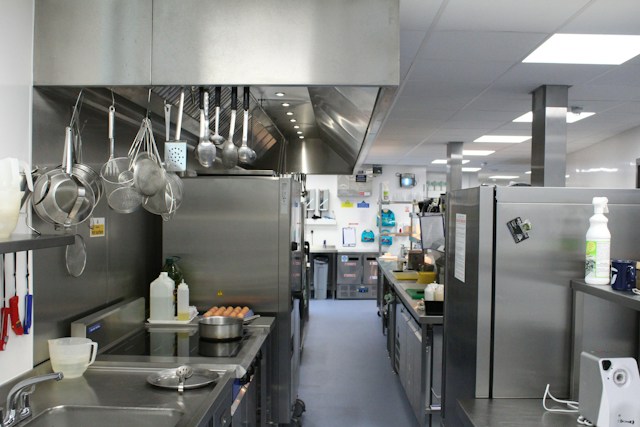
You can tell whether your restaurant hood was cleaned properly by checking more than the visible stainless steel. Review the cleaning report, ask for photographs of the exhaust ducts and rooftop fan, and confirm that the company identified any areas it could not clean.
A shiny hood and a new hoof cleaning service sticker are encouraging, but neither proves that grease was removed throughout the exhaust system.
For restaurant owners in Albuquerque and Santa Fe, the challenge is that much of the equipment is hidden above the cooking line, inside ductwork, or on the roof.
You do not need to climb onto the roof or inspect the ducts yourself. You need enough information from the cleaning company to understand what was completed, what remains unfinished, and whether further work is necessary.
How Can I Check My Restaurant Hood After Cleaning?
Start with a brief visual review of the areas you can safely see from the kitchen floor.
This is not a professional inspection. It is a practical way to identify obvious problems before reviewing the contractor’s documentation.
Check the Visible Hood Interior
Look at the accessible interior surfaces of the hood above the cooking equipment.
The surfaces should not have obvious accumulations of grease, thick oily residue, or grease hanging from edges and seams.
A properly cleaned hood may still have heat discoloration, scratches, or other marks from normal use.
Those marks do not necessarily indicate that grease was left behind.
Pay particular attention to corners and visible seams where deposits can collect.
If you notice substantial residue immediately after cleaning, photograph it and ask the contractor to explain the condition.
Avoid reaching into the hood, removing equipment, or touching components that may be hot or electrically energized.
Look at the Grease Filters
Grease-removal devices, including baffle filters, are part of the exhaust system.
From a safe position, check whether the filters appear properly seated and whether there is obvious grease dripping from them.
Do not assume that a filter’s appearance tells you whether the ductwork behind it was cleaned.
Routine filter washing and professional exhaust system cleaning are different maintenance activities.
A restaurant can have clean filters while substantial grease remains inside the plenum or ducts.
Look for Grease Drips and Unfinished Cleanup
Check the visible area around the hood for fresh grease drips, cleaning residue, or obvious contamination left after the appointment.
Some discoloration or staining may remain even after grease has been removed. However, thick greasy deposits deserve an explanation.
Also look for displaced components, loose filters, or anything that appears different from the equipment’s normal operating condition.
If you notice damage or an apparent problem with the exhaust or fire suppression equipment, report it rather than attempting a repair.
What Proof Should the Hood Cleaning Company Provide?
The most useful evidence combines a description of the work with representative photographs and a record of any unresolved problems.
A single picture of the finished hood cannot establish the condition of concealed ductwork.
Before-and-After Photographs of Hidden Components
Ask the cleaning company whether it can provide photographs from the less-visible parts of the system.
Useful photographs may show the hood plenum, duct interiors through access openings, and rooftop exhaust fan components.
Before-and-after images are particularly helpful when they show approximately the same location and viewing angle.
For example, a photograph of grease inside a horizontal duct before cleaning can be compared with an image of that same duct section afterward.
A photograph taken inside an unrelated duct section would not provide the same assurance.
Photographs are useful evidence, but they have limits. A few images cannot prove that every inch of a long exhaust duct was cleaned.
They should support the written report, not replace it.
The Written Cleaning Report
A useful cleaning report should make it possible to understand what happened during the service appointment.
Look for the service date, business location, cleaning company, work performed, and any noted problems.
Depending on the service and applicable requirements, documentation may also identify the areas cleaned, areas that could not be accessed, and recommended corrective action.
If the report simply states “hood cleaned,” ask whether that refers only to the visible hood or to the connected exhaust system.
The distinction matters because the equipment extends beyond the canopy.
Is a Hood Cleaning Sticker Proof of Proper Cleaning?
No. A hood cleaning sticker identifies service information, but it does not independently prove that every contaminated part of the exhaust system was reached and cleaned.
A sticker is one piece of the service record.
If the contractor reports that a duct section was inaccessible, the presence of a sticker does not resolve that limitation.
Review the sticker together with the work description, photographs, and any deficiencies identified during the visit.
Which Parts of the Exhaust System Should the Evidence Cover?
Commercial cooking exhaust follows a connected path from the cooking equipment to the outdoor discharge.
The cleaning evidence should reflect the components included in the service agreement and the areas requiring attention.
Evidence | What it helps establish | What it cannot prove by itself |
Clean hood canopy | Visible grease deposits were addressed | Concealed ducts were cleaned |
Clean grease filters | Filters received attention | Plenum and fan surfaces are free of grease |
Plenum photographs | Condition of the area behind the filters | Every downstream duct section was reached |
Duct access photographs | Condition at documented duct locations | Entire duct length was cleaned |
Rooftop fan photographs | Condition of photographed fan components | All ductwork below the fan was cleaned |
Service report and label | Work and service information were recorded | Every reported task was completed correctly |
Hood Plenum and Exhaust Ducts
The plenum is the interior chamber behind the grease-removal devices.
Grease-laden air moves through this area before entering the exhaust ductwork.
Because the plenum is not fully visible from the cooking line, photographs or a qualified inspection can provide information that an ordinary visual check cannot.
The same applies to horizontal and vertical ducts.
Long runs, elbows, and changes in direction may require access openings so the cleaning contractor can reach contaminated surfaces.
If the contractor cannot access part of the system, the limitation should be clearly identified.
Rooftop Exhaust Fan
The rooftop fan is another important part of the grease exhaust path.
Grease can accumulate on fan blades, inside the housing, and on other surfaces exposed to cooking exhaust.
Ask whether the fan was included in the cleaning and whether the company has photographs showing the work.
Some rooftop fans have access limitations that make cleaning more difficult. Properly installed exhaust fan hinge kits can improve access for certain fan installations.
Never attempt to open an energized exhaust fan or climb onto a roof to check the cleaning yourself.
Those tasks should be handled by qualified personnel using appropriate safety procedures.
What Are the Warning Signs of Incomplete Hood Cleaning?
A problem does not always mean the entire cleaning was inadequate.
However, certain findings should prompt questions before you consider the service fully resolved.
Grease Remains in an Area That Was Supposed to Be Cleaned
If substantial grease is visible immediately after the appointment in an area included in the agreed scope, document the condition.
Photograph the location and compare it with the service report.
Keep in mind that heat staining and discoloration are not the same as greasy deposits.
If the difference is unclear, ask the contractor or another qualified professional to evaluate it.
There Is No Evidence of Duct or Fan Cleaning
Missing photographs do not automatically prove the work was skipped.
Some providers may document cleaning differently.
However, if you paid for complete exhaust system cleaning, it is reasonable to ask how the contractor verified the condition of the hidden components.
A clear explanation and supporting records are more useful than an assurance based only on the appearance of the canopy.
The Report Identifies Inaccessible Areas
An inaccessible duct section is not necessarily evidence of poor workmanship.
It may indicate an existing equipment or access problem.
What matters is whether the limitation was identified and whether there is a plan to address it.
For example, a duct elbow without a suitable access opening may require evaluation before it can be properly cleaned.
A report that identifies this problem gives the restaurant owner an opportunity to correct it.
A report that ignores the inaccessible section does not.
The Report and Visible Conditions Do Not Match
Suppose the cleaning report indicates that the hood interior was cleaned, but a substantial layer of grease remains visible in that same area immediately afterward.
That discrepancy deserves clarification.
Similarly, if the report states that the rooftop fan was cleaned but the contractor later explains that the fan could not be opened, ask for a corrected account of the work.
The goal is an accurate record, not a dispute over wording.
What Should I Do If I Think My Hood Was Not Cleaned Properly?
Begin by comparing the contracted work with the evidence available.
You can then decide whether the issue requires clarification, corrective cleaning, access improvements, or an independent evaluation.
Match the Evidence to the Next Step
What you find | Appropriate next step |
Report, scope, and photographs are consistent | Retain the records for future reference |
Photographs are missing or unclear | Ask how concealed components were verified |
Visible grease remains in a serviced area | Document the condition and request evaluation |
A duct section was inaccessible | Request a written corrective access plan |
The report contradicts the contractor’s explanation | Ask for clarification or corrected documentation |
A serious fire safety concern remains unresolved | Seek qualified evaluation and contact the appropriate fire authority when warranted |
Contact the Cleaning Company First
Describe the concern specifically.
Instead of saying the entire hood cleaning was poor, identify the location and the information you need.
For example, you might ask which duct access opening was used to clean a horizontal section or whether the rooftop fan was included in the service.
If a photograph appears to show remaining grease, provide the image and ask for an explanation.
Request a written response when the issue involves an uncleaned area, equipment damage, or a potential safety concern.
Request Corrective Work When Necessary
If a required area was not cleaned, discuss how and when the contractor can evaluate and address the problem.
The appropriate response depends on the condition of the equipment and the original service agreement.
Some concerns may involve additional cleaning. Others may require access improvements or repairs before cleaning can be completed.
If the issue remains disputed, consider an evaluation by another qualified kitchen exhaust cleaning professional.
For serious unresolved fire protection concerns, the local authority having jurisdiction can provide guidance about applicable requirements.
In Albuquerque, the Albuquerque Fire Rescue website is a starting point for local fire prevention information.
Albuquerque Example: A Shiny Hood With Missing Duct Evidence
Consider a hypothetical restaurant in Albuquerque’s Nob Hill neighborhood.
The restaurant has a commercial cooking hood connected to a horizontal duct above the ceiling and a rooftop exhaust fan.
The cleaning company finishes its appointment. The hood looks clean, the filters are back in place, and a new service sticker is visible.
The owner receives an invoice but no photographs of the ductwork or fan.
The service report also mentions that one duct elbow could not be accessed.
Does that mean the cleaning was performed incorrectly?
Not necessarily.
The contractor may have cleaned the accessible components properly. However, the owner still needs to understand what happened at the inaccessible elbow.
The next step is to request clarification about the exact location, whether grease was present, and what corrective action is recommended.
Now consider another restaurant that receives a dated report with representative photographs of the hood, plenum, duct access openings, and rooftop fan.
The contractor also identifies any outstanding deficiencies.
That restaurant has a clearer record of the work and a better basis for scheduling follow-up maintenance.
Neither example proves the condition of every surface without a qualified evaluation. The difference is the quality of information available to the owner.
How Does NFPA 96 Relate to Hood Cleaning Verification?
The National Fire Protection Association’s NFPA 96 standard addresses ventilation control and fire protection for commercial cooking operations.
Its provisions include requirements concerning the inspection and cleaning of grease-contaminated exhaust systems.
The specific requirements for cleaning, documentation, labels, and deficiencies depend on the applicable edition and local adoption.
Restaurant owners should avoid assuming that every cleaning company’s paperwork format is mandatory under every jurisdiction’s rules.
What matters is understanding the applicable requirements and retaining enough documentation to evaluate the service.
The International Kitchen Exhaust Cleaning Association also provides industry education and professional resources concerning kitchen exhaust cleaning.
For a separate explanation of grease removal standards, see the discussion of what “clean to bare metal” means for commercial kitchen hood cleaning.
Frequently Asked Questions
Can I Inspect My Restaurant’s Rooftop Exhaust Fan Myself?
Restaurant owners should not climb onto the roof or open energized exhaust equipment to verify cleaning. Ask the contractor for photographs and documentation or arrange an evaluation by qualified personnel.
Does Dark Metal Mean the Hood Was Not Cleaned Properly?
No. Metal may remain discolored from heat, oxidation, or age after grease deposits have been removed. Dark coloration alone is not proof of inadequate cleaning.
What If the Company Says It Cleaned Only the Hood?
Review the service agreement. Cleaning the visible hood is different from cleaning the entire commercial kitchen exhaust system. If you expected duct and fan cleaning, clarify what was included and what additional service may be necessary.
Can I Request a Follow-Up Visit?
Yes. You can ask the cleaning company to review concerns or return to evaluate a questionable area. Whether additional work is included in the original price depends on the agreement and circumstances.
Does Hood Cleaning Include Fire Suppression System Inspection?
Not automatically. Exhaust cleaning removes grease from the ventilation system, while kitchen hood fire suppression systems require their own inspection and maintenance. Ask how the two services are scheduled and coordinated.
Request Commercial Kitchen Hood Cleaning in Albuquerque
A clean-looking hood is only the beginning of evaluating a completed cleaning job.
The most useful information comes from understanding which components were serviced, reviewing evidence from concealed areas, and identifying any unresolved grease or access problems.
Brazas Fire provides commercial kitchen hood and exhaust cleaning services for restaurants and commercial cooking facilities in Albuquerque, Rio Rancho, Santa Fe, and other New Mexico communities.
Its services include hood cleaning, exhaust duct cleaning, rooftop exhaust fan cleaning, and grease removal.
If you have questions about cleaning scope, grease accumulation, duct access, or a recently completed service, contact Brazas Fire to discuss your kitchen exhaust system.
Call Brazas Fire at 505-889-8999 to discuss commercial kitchen hood cleaning services.
Brazas Fire
2900 Wellesley Dr. NE
Albuquerque, NM 87107
A useful cleaning record should leave you with a clear understanding of what was completed and what still needs attention.