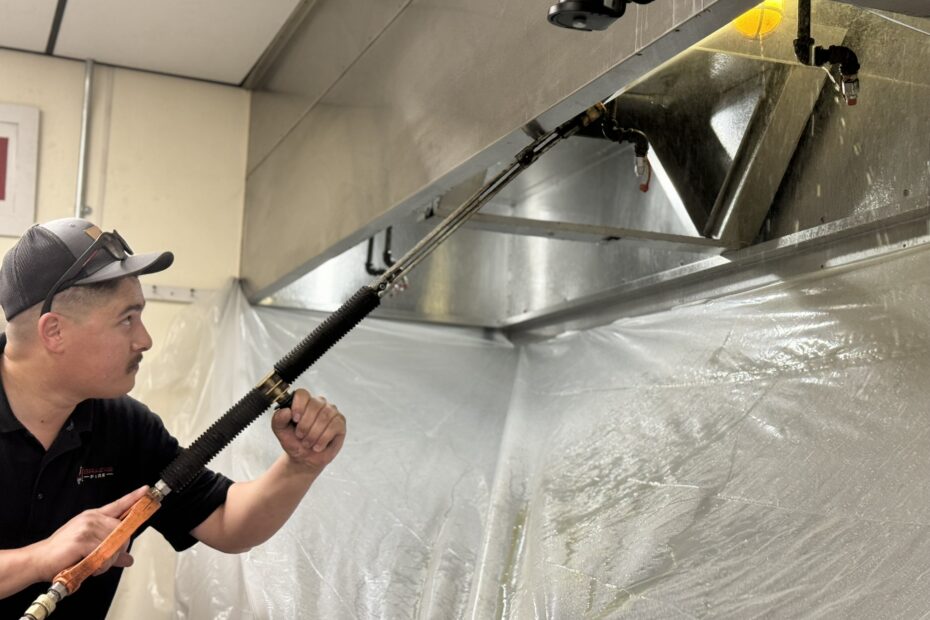
 For restaurant owners, food truck operators, and commercial kitchen managers throughout Albuquerque, routine kitchen hood cleaning is more than a maintenance task—it is an essential part of protecting employees, customers, property, and business operations from grease-related fires.
One of the questions Brazas Fire is asked most often is:
“How often does a commercial kitchen hood need to be professionally cleaned?”
The answer depends on the type of cooking operation and the volume of grease produced.
Unlike many maintenance schedules, NFPA 96 does not establish one cleaning interval for every commercial kitchen. Instead, the required cleaning frequency is based on how much grease accumulates inside the exhaust system and the fire hazards created by the cooking process.
Since 1986, Brazas Fire has helped restaurants, institutional kitchens, and food service operations throughout Albuquerque and New Mexico remain compliant with NFPA 96 by providing professional commercial kitchen hood cleaning, inspections, and ongoing maintenance. As a Phil Ackland Qualified Company, Brazas Fire follows nationally recognized commercial kitchen exhaust cleaning procedures that support fire code compliance and reduce grease-related fire hazards.
NFPA 96 Kitchen Hood Cleaning Requirements
The National Fire Protection Association (NFPA 96) establishes nationally recognized standards for inspecting and cleaning commercial kitchen exhaust systems.
Rather than requiring the same schedule for every business, NFPA 96 assigns cleaning frequencies according to cooking volume, cooking methods, and the amount of grease generated.
The four primary cleaning intervals include:
Monthly Cleaning
Commercial kitchens using solid-fuel cooking equipment require the most frequent maintenance.
Wood-fired pizza ovens, charcoal grills, mesquite cooking equipment, and similar appliances generate heavy accumulations of grease, soot, ash, and creosote that can rapidly become a serious fire hazard if allowed to accumulate.
Because of these conditions, NFPA 96 generally requires these systems to be professionally cleaned every month.
Quarterly Cleaning
High-volume commercial kitchens typically require cleaning every three months.
This category often includes:
- Fast-food restaurants
- Twenty-four-hour restaurants
- High-volume cafeterias
- Restaurants with multiple deep fryers
- Charbroiler operations
- Wok cooking stations
These cooking methods produce significant quantities of grease-laden vapors that travel throughout the exhaust system each day.
Brazas Fire technicians routinely find that facilities with heavy cooking volumes accumulate grease much faster than restaurant owners often expect.
Maintaining a quarterly cleaning schedule helps reduce fire hazards while supporting continued compliance with fire code requirements.
Semi-Annual Cleaning
For many commercial kitchens throughout Albuquerque, semi-annual cleaning represents the most common maintenance schedule.
This category typically includes:
- Full-service restaurants
- Neighborhood cafés
- Family restaurants
- Many food trucks
- Moderate-volume commercial kitchens
Facilities operating under normal business hours with conventional gas or electric cooking equipment often fall within this maintenance interval.
Routine six-month cleaning helps prevent excessive grease accumulation while keeping the exhaust system operating efficiently.
Annual Cleaning
Some lower-volume cooking operations qualify for annual professional cleaning.
Examples may include:
- Churches
- Community centers
- Office cafeterias
- Seasonal kitchens
- Certain daycare facilities
Although these operations cook less frequently, the exhaust system still requires periodic inspection and professional cleaning to maintain fire safety and code compliance.
Why Cleaning Frequency Matters
Kitchen hood cleaning schedules are not based on convenience.
They are based on reducing the risk of fire.
Every time food is prepared, grease-laden vapors move through the hood, plenum, ductwork, and rooftop exhaust fan. As those vapors cool, grease gradually adheres to interior metal surfaces throughout the exhaust system.
Field experience has shown that hidden grease accumulation is one of the most significant fire hazards inside a commercial kitchen.
If a cooking fire reaches those deposits, flames can rapidly spread through the exhaust system and into other areas of the building.
That is why NFPA 96 requires routine inspection and cleaning based on actual cooking conditions rather than a single calendar schedule.
Regular maintenance helps remove this fuel source before it creates a serious safety hazard.
Why NFPA 96 Cleaning Schedules Matter
The cleaning intervals established by NFPA 96 are based on decades of fire investigation data and practical experience within commercial cooking environments.
These schedules are designed to reduce one of the leading causes of commercial kitchen fires—grease accumulation inside the exhaust system.
National fire statistics consistently show that thousands of restaurant and commercial cooking fires occur each year across the United States. A large percentage of those fires begin on cooking equipment such as deep fryers, ranges, charbroilers, and grills.
In many cases, the initial cooking fire can be controlled quickly.
The greater danger develops when flames spread into grease deposits inside the hood, plenum, ductwork, and rooftop exhaust fan.
Field experience has shown that grease accumulation inside these concealed areas can allow fire to travel rapidly throughout the exhaust system and into other portions of the building.
Regular professional cleaning removes this fuel source before it creates a significant fire hazard.
Fire Code Compliance Protects More Than Your Business
Many restaurant owners initially view routine hood cleaning as another regulatory requirement.
In reality, maintaining the proper cleaning schedule provides benefits that extend well beyond passing a fire inspection.
Routine commercial kitchen hood cleaning helps:
- Reduce grease-related fire hazards.
- Support compliance with NFPA 96.
- Prepare facilities for fire marshal inspections.
- Help satisfy insurance maintenance requirements.
- Improve exhaust system performance.
- Reduce emergency maintenance issues.
- Extend the service life of kitchen exhaust equipment.
Brazas Fire technicians routinely find that facilities following recommended maintenance schedules experience fewer fire code deficiencies and fewer unexpected operational interruptions than kitchens where service has been delayed.
Preventive maintenance remains one of the most effective ways to protect both people and property.
What Brazas Fire Includes During Professional Hood Cleaning
Professional kitchen hood cleaning involves much more than washing visible stainless-steel surfaces.
Brazas Fire performs complete exhaust system cleaning designed to restore accessible components to bare metal in accordance with NFPA 96 cleaning standards.
Each service typically includes:
- Hood canopy cleaning.
- Grease filter cleaning.
- Plenum cleaning.
- Interior ductwork cleaning.
- Rooftop exhaust fan cleaning.
- Accessible rooftop grease containment area cleaning.
Every component is inspected throughout the cleaning process to identify grease accumulation, developing maintenance concerns, and conditions that may affect fire safety or code compliance.
Field experience has shown that hidden grease buildup inside ductwork and rooftop exhaust equipment is often overlooked until significant accumulation has already occurred.
Professional cleaning helps eliminate those hidden hazards before they become serious problems.
Ongoing Maintenance Makes Compliance Easier
One of the most effective ways to remain compliant is to establish a recurring maintenance schedule based on the cooking operation rather than waiting until grease becomes visible.
Brazas Fire works with restaurant owners to develop maintenance schedules that match their actual cooking volume and the requirements established by NFPA 96.
This proactive approach helps facilities:
- Maintain consistent fire code compliance.
- Reduce grease accumulation between service visits.
- Minimize emergency cleaning requests.
- Improve long-term system performance.
- Better manage annual maintenance budgets.
Regular maintenance also allows technicians to identify small issues before they develop into larger repairs or inspection deficiencies.
Scheduled Service Removes the Guesswork
Tracking hood cleaning intervals can become difficult for busy restaurant owners managing employees, inventory, customers, and daily operations.
Brazas Fire helps simplify that process by maintaining service records and scheduling recurring maintenance based on each customer’s required cleaning frequency.
Rather than relying on memory or waiting for an inspection notice, restaurant owners receive timely reminders when professional service is due.
This organized approach helps reduce missed cleaning intervals while providing the documentation needed during fire marshal inspections, insurance reviews, and facility audits.
Routine maintenance is far easier—and far less expensive—than recovering from a grease fire or correcting avoidable fire code violations.
Frequently Asked Questions
Can restaurant employees clean the kitchen hood system themselves?
Restaurant employees play an important role in maintaining a clean kitchen, but their responsibilities are limited to routine daily maintenance.
Kitchen staff can safely clean:
- Exterior hood surfaces
- Removable grease filters
- Cooking equipment surfaces
- General kitchen work areas
However, NFPA 96 requires the hidden portions of the exhaust system—including the plenum, interior ductwork, and rooftop exhaust fan—to be professionally cleaned by qualified technicians using specialized equipment and documented cleaning procedures.
Brazas Fire technicians routinely find significant grease accumulation inside these concealed areas, even in kitchens that appear clean during normal daily operations.
Professional hood cleaning helps ensure the entire exhaust system—not just the visible portions—is maintained in accordance with recognized fire safety standards.
How long does professional kitchen hood cleaning usually take?
The amount of time required depends on the size of the exhaust system, the length of the ductwork, and the amount of grease accumulation.
For most commercial kitchens, professional hood cleaning typically requires three to five hours.
To minimize disruption, Brazas Fire schedules most hood cleaning services during evenings, overnight hours, early mornings, or other times when cooking operations have stopped.
Proper scheduling allows restaurants to maintain code compliance while avoiding unnecessary interruptions to business operations.
What happens if a restaurant misses its required cleaning schedule?
Delaying required maintenance increases more than grease accumulation.
It also increases the likelihood of:
- Fire code violations.
- Failed fire marshal inspections.
- Insurance compliance concerns.
- Reduced exhaust system performance.
- Increased fire risk.
Field experience has shown that kitchens operating beyond their recommended cleaning interval often require additional labor to remove hardened grease deposits throughout the exhaust system.
Maintaining the proper cleaning schedule helps reduce both fire hazards and long-term maintenance costs.
Does every restaurant require the same cleaning schedule?
No.
NFPA 96 establishes cleaning frequencies based on cooking activity rather than assigning every kitchen the same maintenance interval.
Factors considered include:
- Cooking volume.
- Type of cooking equipment.
- Grease production.
- Fuel source.
- Hours of operation.
A food truck, neighborhood café, full-service restaurant, hospital kitchen, and wood-fired pizza restaurant may all require different cleaning schedules because each operation produces different levels of grease accumulation.
Brazas Fire evaluates every facility individually to recommend an inspection and cleaning schedule that supports both fire safety and code compliance.
Routine Hood Cleaning Is an Investment in Fire Safety
Professional kitchen hood cleaning provides benefits that extend far beyond meeting regulatory requirements.
A properly maintained exhaust system helps:
- Reduce grease-related fire hazards.
- Improve ventilation efficiency.
- Support compliance with NFPA 96.
- Prepare facilities for fire marshal inspections.
- Help satisfy insurance maintenance requirements.
- Extend the service life of exhaust system components.
- Reduce the likelihood of emergency repairs and business interruptions.
Regular cleaning also allows technicians to identify developing maintenance concerns before they become larger operational or safety issues.
Field experience has consistently shown that restaurants maintaining scheduled hood cleaning programs experience fewer compliance issues and improved long-term exhaust system performance.
Schedule Professional Kitchen Hood Cleaning with Brazas Fire
Since 1986, Brazas Fire has provided professional commercial kitchen hood cleaning, kitchen hood fire suppression systems, inspections, testing, maintenance, and fire code compliance services for restaurants, food trucks, institutional kitchens, and commercial food service facilities throughout Albuquerque, the Albuquerque metro area, and communities across New Mexico.
As a Phil Ackland Qualified Company, Brazas Fire follows nationally recognized commercial kitchen exhaust cleaning procedures that support NFPA 96 compliance while helping restaurants maintain cleaner, safer, and more reliable kitchen exhaust systems.
Whether a facility requires routine hood cleaning, recurring maintenance, grease containment solutions, or a complete kitchen hood fire suppression system, Brazas Fire provides experienced technicians, detailed compliance documentation, and practical fire protection solutions backed by decades of field experience.
Brazas Fire provides inspection, testing, maintenance, and installation services for commercial fire protection systems throughout Albuquerque, the Albuquerque metro area, and all of New Mexico.
To schedule service or request an inspection, contact Brazas Fire at 505-889-8999 or visit https://brazasfire.com.