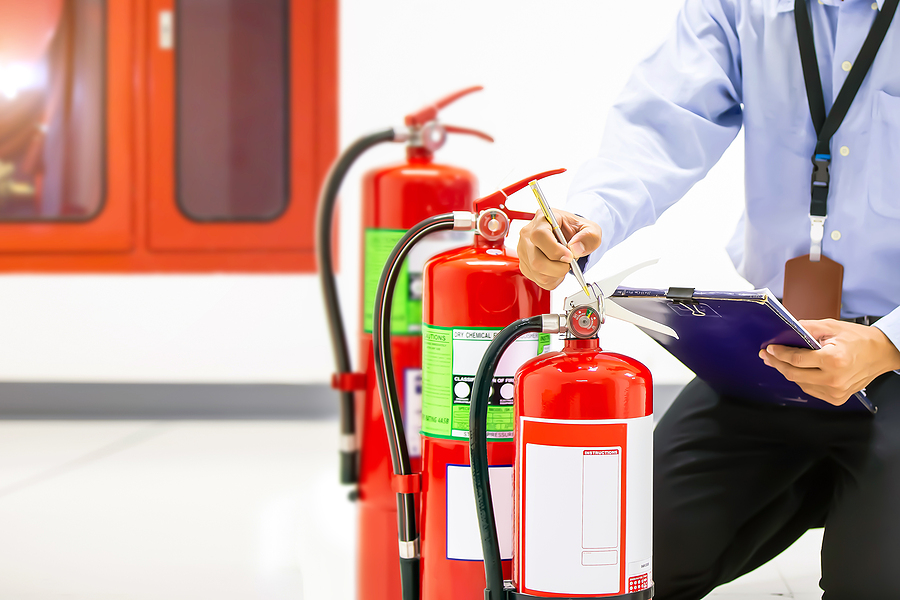
Fire safety is critical for every building owner. But how many fire extinguishers do you need? Knowing the correct number meets fire code—and helps protect your building, employees, and business.
You know that fire extinguishers are required by fire code in all industrial and commercial buildings. But while most building owners and safety specialists worry about not having enough fire extinguishers, few know how many they need. So why is that? Because there’s no cut-and-dry answer. Fire extinguisher requirements are based on each building’s fire safety needs. When building owners and managers understand fire extinguisher requirements, they can work with professional fire protection companies to keep their buildings properly protected.
Factors that Determine How Many Fire Extinguishers You Need
Various factors determine how many fire extinguishers you should have in your building. They include:
- Size and Layout of Your Building
- Placement of Fire Extinguishers
- Fire Hazard Level
In the United States, the Occupational Safety and Health Administration (OSHA) implements standards and building codes. These guidelines take all of the above factors into account when determining how many fire extinguishers you need in your building. You can take fire extinguisher safety a step further by knowing what type of fire extinguisher you should have in your building.
At NFPA, we work with fire and life safety service providers to ensure that not only do buildings comply with OSHA guidelines but also have the correct number of fire extinguishers. This is based on a building’s square footage and fire hazard level.
Size and Layout of Your Building
How large is your building? What does the layout of your room consist of? Both of these questions determine how many fire extinguishers you should have. OSHA requires that all portable fire extinguishers be no more than 75 feet apart. Your building’s square footage will determine how many fire extinguishers you need. There are some other factors you should know.
Fire Hazard Level
Before we dive into fire hazard levels, it’s important for building owners to understand the 5 fire classes they may encounter.
- Class A – Ordinary Combustibles
- Class B – Flammable liquids and gases
- Class C – Electrical Equipment
- Class D – Combustible Metals
- Class K – Cooking Oils and Grease
A fire hazard level is determined by the amount of fire hazard in your building. Different businesses can be assigned to different fire hazard levels based on the materials in their buildings. Fire hazard levels determine not only what class of fire extinguisher you’ll need but also how close to these hazards fire extinguishers should be. There are 3 different fire hazard levels: light, ordinary, and extra. Commercial kitchens are a class of their own and pose fire hazard.
Light Fire Hazard
If there is a low quantity of combustible materials in your building, you have what’s called a light fire hazard. A building with a low fire hazard will have low amounts of Class A hazards and Class B hazards. Most office buildings, schools, churches, and hotels qualify as light fire hazards.
Ordinary Fire Hazard
Ordinary fire hazards are split into two categories. Ordinary fire hazards I and II. An ordinary fire hazard has a small amount of fire hazards. These types of buildings have a moderate amount of Class A and Class B hazards. Examples of hazards found in ordinary settings include fabric stores, dry cleaning facilities, and post offices. An ordinary fire hazard II has more flammable material in close proximity than an ordinary fire hazard I. But it does not qualify as an extra fire hazard under the fire hazard requirements. Examples include parking garages, hardware stores, and other businesses with ignition sources.
Extra Fire Hazard
Extra fire hazards have more than an “ordinary” amount of fire hazards. These buildings have a high amount of Class A hazards and large quantities of Class B hazards. Due to the high amounts of combustibles and ignition sources, there is an increased risk of fire in these buildings. Examples of extra fire-hazard buildings include assembly plants, furniture upholstery shops, refinish shops, and die-casting facilities.
Commercial K
Commercial kitchens require Class K extinguishers due to their use of cooking oils and grease, which create a unique fire hazard.
Placement of Fire Extinguishers
Just as different fire hazards require different fire extinguishers. There are also different placement requirements for each fire hazard. The building’s square footage and fire hazard levels must be considered when placing extinguishers. Below is a brief overview of fire extinguisher placement:
- As you can see, your building’s square footage and fire hazard level play a major role in determining how many fire extinguishers you need. However, you shouldn’t guess at how many fire extinguishers your building requires. Factors such as fire extinguisher placement, the type of fire extinguishers your building requires, and the number of fire extinguishers you need should be determined by a professional fire and life safety service provider.
A trustworthy fire and life safety company will have the experience you need to help keep your business up to fire code. For basic fire extinguisher guidelines, click here. - Fire extinguisher mounting requirements can get tricky when you start looking at the different types of extinguishers. One thing to note is how many fire extinguishers you need in your business. Fire extinguisher mount heights can vary. The distance between extinguishers usually remains the same.
DISTANCE BETWEEN COMMERCIAL FIRE EXTINGUISHERS
Class A Fire Extinguishers
Distance Needed: Every 75 feet
Class Location: Contains Ordinary Combustible materials
Class Examples: Office, classrooms, and assembly rooms
Class B Fire Extinguishers
Distance Needed: Every 50 feet
Class Location: Contains Flammable liquids/gases
Class Examples: Workshop areas, storage facilities, and warehouses
Class C Fire Extinguishers
Distance Needed: Distance Required by Class A or Class B Fire Extinguisher
Class Location: Contains Electrical equipment
Class Examples: Bathroom with electrical outlets, boiler rooms, break rooms without boxed-in appliances
Class D Fire Extinguishers
Distance Needed: Every 75 feet
Class Location: Where metal powders, flakes, and/or shavings are manufactured at least once every 1-2 weeks.
Class Examples: Metal pulverizing rooms, mixing rooms
Class K Fire Extinguishers
Distance Needed: Every 30 feet
Class Location: Cooking establishments
Class Examples: Restaurants, Delis, and Catering facilities
Things to remember when searching for fire extinguisher placement requirements:
- Keep in mind that while fire extinguishers can be 75 feet apart.
- They should also be no more than 25 feet away from the hazard they’re protecting. By either being mounted on the wall or placed right next to the hazard
Contact Brazas Fire to determine how many fire extinguishers your building requires.
Fire extinguisher requirements can vary from building to building. That’s why at Brazas Fire; our main goal is to help you achieve fire code compliance. In the simplest way possible. We offer FREE fire safety consultations to determine your business’s fire extinguisher needs. Give us a call today at 505-889-8999 to schedule your consultation.