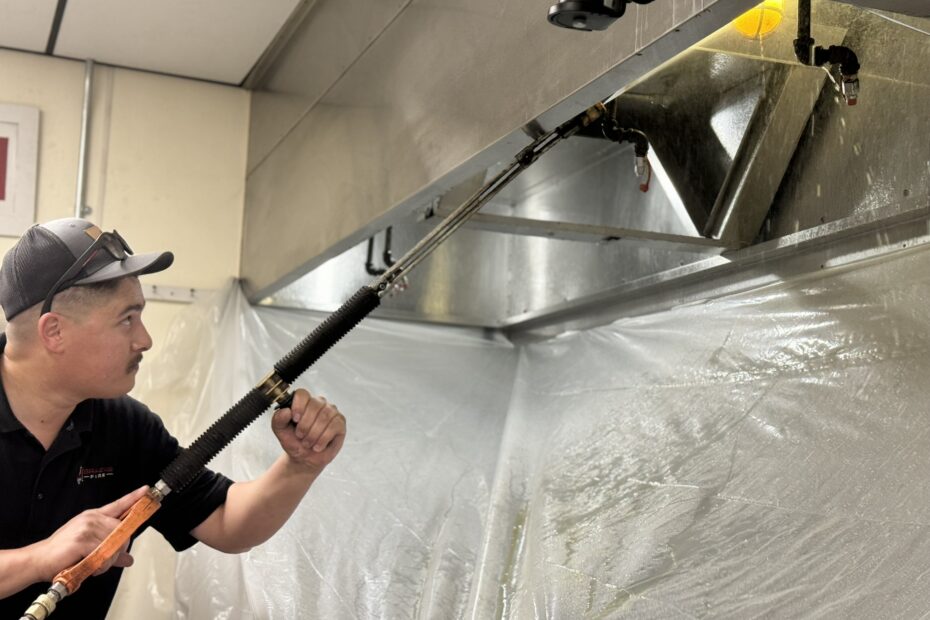
Professional kitchen hood cleaning removes grease from areas that restaurant employees cannot safely or practically reach during routine maintenance. Depending on the system’s condition, technicians may use chemical degreasers, scrapers, hot water, pressure-washing equipment, and other specialized tools to clean the hood, plenum, ductwork, exhaust fan, and accessible interior surfaces.
That process can release a significant amount of grease, dirty water, chemical residue, and debris.
Restaurant owners are therefore justified in asking an important question before service begins:
How will the cleaning company prevent that mess from reaching my fryers, ranges, ovens, electrical controls, floors, and food-preparation areas?

A professional hood cleaning company should begin by evaluating the kitchen and creating a containment plan. Technicians commonly use heavy plastic sheeting to cover or isolate the cooking line and form a funnel or trough beneath the hood. This containment directs grease and wash water into buckets, drums, or another controlled collection point instead of allowing runoff to spread across the kitchen.
Protecting a commercial kitchen requires more than draping plastic over the appliances. The contractor must consider equipment temperatures, electrical components, fixed gas and utility connections, hood design, fire-suppression nozzles, nearby work surfaces, available drains, chemical compatibility, floor protection, and the amount of grease expected during cleaning.
No containment method can guarantee that every drop of water will remain inside the work area. However, careful preparation, secure containment, active monitoring, and a thorough final inspection can significantly reduce the risk of overspray, runoff, chemical exposure, and equipment damage.
The Direct Answer
Hood cleaning companies protect your line equipment and kitchen by creating a controlled work zone before applying water or degreaser.
Depending on the kitchen, this may include:
- Shutting down and cooling the cooking appliances
- Removing food, utensils, paper products, and portable equipment
- Covering ranges, fryers, ovens, griddles, and countertops
- Identifying electrical controls, outlets, and other moisture-sensitive components
- Installing heavy plastic sheeting beneath and around the hood
- Forming the plastic into a funnel or trough
- Securing the containment with clamps, magnets, tape, or other suitable methods
- Directing runoff into collection containers
- Protecting floors and nearby work surfaces
- Monitoring the plastic for leaks during cleaning
- Working carefully around fire-suppression nozzles and detection components
- Removing the containment after the work
- Cleaning residual drips and inspecting the kitchen before equipment is restarted
The exact method varies according to the hood, appliances, floor plan, grease level, and cleaning process. A small café hood will not require the same setup as a long, high-volume fryer and charbroiler line.
The important point is that professional service should involve deliberate preparation and containment—not simply pointing a pressure washer at the exhaust system.
Why Professional Hood Cleaning Creates So Much Runoff
Grease inside a commercial kitchen exhaust system does not always wipe away easily.
Over time, grease-laden vapors collect on:
- Grease filters
- Hood surfaces
- The plenum behind the filters
- Transition sections
- Exhaust ductwork
- Access panels
- Fan blades
- Fan housings
- Rooftop components
Some deposits remain soft and oily. Others become sticky, hardened, or mixed with dust, carbon, and cooking residue.
Technicians may apply a commercial degreaser to loosen these deposits before rinsing the surfaces with hot water or pressure-washing equipment. The loosened material then becomes a mixture of grease, chemical solution, water, and debris that must go somewhere.
Without containment, it could:
- Run across appliances
- Enter fryer oil
- Reach electrical controls
- Flow onto the floor
- Contaminate preparation surfaces
- Spread underneath fixed equipment
- Leak into cabinets or wall openings
- Create slippery walking conditions
- Leave chemical or grease residue behind
The dirtier the system, the more substantial the runoff may be. Heavy grease deposits may also be released unevenly, making active monitoring especially important.
What Is a Plastic Funnel Containment System?
A plastic funnel containment system is a temporary barrier installed beneath and around the hood to capture runoff during cleaning.
Technicians use heavy plastic sheeting rather than a lightweight covering that may tear or collapse. The material is secured along the hood or surrounding structure and shaped so water flows toward a designated collection point.
The containment may resemble:
- A funnel
- A trough
- A sloped basin
- A temporary enclosure
- A combination of appliance coverings and runoff channels
The lowest portion of the plastic is usually directed toward a bucket, drum, wet vacuum connection, pumping system, or other approved collection method.
This setup performs several jobs at once:
- It creates separation between the cleaning area and the appliances.
- It captures loosened grease and wash water.
- It controls the direction of runoff.
- It limits overspray from reaching adjacent surfaces.
- It gives technicians a visible area to monitor for leaks.
Plastic containment is effective only when it is installed carefully. Water can find small openings, loose seams, folds, low spots, and improperly secured edges.
Technicians may therefore use clamps, magnets, tape, support poles, weights, or other methods appropriate for the hood and surrounding surfaces.
Containment Material | Typical Purpose |
Heavy plastic sheeting | Covers appliances and forms runoff barriers |
Plastic funnel or trough | Directs water toward collection containers |
Tarps or floor coverings | Protect walking and work surfaces |
Clamps, magnets, or tape | Secure containment materials |
Buckets or drums | Collect greasy wash water |
Absorbent pads | Control small drips or leaks |
Equipment covers | Shield sensitive controls and openings |
Preparing the Kitchen Before Cleaning Begins
Good containment starts before the first filter is removed or chemical is applied.
The cleaning crew should inspect the work area and identify:
- The length and shape of the hood
- Appliances directly below it
- Fixed and portable equipment
- Hot oil and cooking surfaces
- Electrical controls and receptacles
- Gas, water, and electrical connections
- Nearby food-preparation areas
- Fire-suppression nozzles and detection components
- Floor drains and wastewater collection options
- Areas that cannot tolerate moisture
- Existing damage or loose components
Restaurant management also has a role in preparation.
Before the scheduled service, staff may be asked to:
- Complete cooking early enough for equipment to cool
- Shut down appliances according to facility procedures
- Remove exposed food
- Move utensils, pans, containers, and paper products
- Clear shelving near the hood
- Identify equipment that must not be moved
- Provide roof and mechanical-area access
- Explain known leaks or electrical concerns
- Identify alarm, security, or building-access restrictions
The contractor and restaurant should agree in advance about who will move portable equipment and what must remain in place.
Why Cooking Equipment Must Be Shut Down and Cool
Hood cleaning should not begin over an active cooking line.
Hot appliances create several hazards. Water contacting hot oil can cause violent splashing. Cleaning chemicals may react differently on heated surfaces. Plastic containment can soften, shift, or become damaged near excessive heat.
Fryers are especially important because oil can remain dangerously hot long after the burners or heating elements are turned off.
The time needed for equipment to cool depends on:
- Appliance type
- Oil volume
- Operating temperature
- Construction
- Kitchen temperature
- Manufacturer guidance
- Facility shutdown procedures
Restaurant management should not assume that turning off a fryer fifteen minutes before service is enough. The hood cleaning company should communicate its preparation expectations before arrival.
Whether fryer oil must be drained depends on the equipment, cleaning plan, owner’s procedures, and contractor’s requirements. A universal rule should not be applied to every kitchen.
Protecting Ranges, Griddles, Fryers, and Ovens
Commercial cooking appliances are expensive and often contain controls, ignition systems, wiring, thermostats, valves, seams, vents, and other components that were not designed to receive uncontrolled pressure-washing overspray.
Protection may include:
- Covering the complete top surface
- Shielding control panels
- Closing or protecting openings
- Creating raised plastic above the appliance rather than laying it directly on controls
- Directing runoff away from seams
- Protecting fryer vats from contamination
- Separating the appliance covering from the main runoff funnel
- Monitoring low points where water could collect
A range with simple manual controls may require a different approach than an electric fryer with a digital control board.
Similarly, an oven may appear enclosed while still having vents, door seams, control openings, or electrical components vulnerable to moisture.
The cleaning crew should evaluate each appliance rather than assuming one plastic sheet provides sufficient protection for the entire line.
Kitchen Equipment | Primary Protection Concern |
Fryers | Hot oil, open vats, controls and electrical components |
Ranges | Burners, ignition systems, valves and control openings |
Griddles | Control panels, seams and electrical components |
Ovens | Vents, door openings and digital controls |
Charbroilers | Heavy grease deposits and open cooking surfaces |
Countertop appliances | Portability, electrical cords and exposed controls |
Protecting Electrical Controls and Receptacles
Water and energized electrical equipment are a dangerous combination.
Before cleaning, the contractor and restaurant should identify:
- Appliance control panels
- Electrical receptacles
- Switches
- Junction boxes
- Power cords
- Disconnects
- Exposed wiring
- Hood-mounted controls
- Fan controls
- Nearby lighting components
Equipment should be shut down following appropriate procedures. Restaurant employees and cleaners should not improvise electrical disconnections or bypass established safety practices.
Plastic sheeting can help shield electrical components, but wrapping should never be treated as permission to spray directly toward energized controls.
Older kitchen equipment deserves special attention. Worn seals, loose control panels, damaged cords, missing covers, and deteriorated gaskets may allow moisture to enter areas that would normally be better protected.
These conditions should be discussed before service begins.
Securing and Monitoring the Plastic Containment
A containment system is not something technicians install and then ignore.
Water adds weight. Grease makes surfaces slippery. Chemical solution can move through small gaps. The force of washing can cause plastic to shift.
During cleaning, technicians should monitor:
- Attachment points
- Seams
- Low spots
- Collection containers
- Plastic tension
- Drain lines or hoses
- Drips around the edges
- Water accumulating above equipment
- Movement caused by pressure-washing spray
Collection containers must be emptied or changed before they overflow. Low areas in the plastic may need to be adjusted so runoff continues moving toward the intended point.
One practical issue contractors often encounter is that the nearest suitable drain may be far from the cooking line. In that situation, water may need to be collected and transferred rather than allowed to flow freely across the kitchen.
Collecting Grease and Wastewater
The runoff from hood cleaning is not ordinary rinse water. It may contain:
- Cooking grease
- Carbon deposits
- Degreaser
- Food residue
- Dirt
- Metal particles
- Other contaminants removed from the exhaust system
A professional contractor should have a plan for capturing and managing this material.
Possible methods include:
- Buckets
- Collection drums
- Wet vacuums
- Pumps
- Temporary hoses
- Approved drains
- Off-site disposal where required
Not every floor drain is automatically an acceptable disposal point. Wastewater handling may depend on facility policies, grease-interceptor arrangements, plumbing limitations, environmental requirements, and local rules.
Owners should ask the contractor how runoff will be collected and where it will go.
Protecting Floors and Nearby Work Areas
Even with a well-built funnel, the surrounding floor needs attention.
Technicians may place:
- Tarps
- Slip-resistant coverings
- Absorbent materials
- Temporary barriers
- Warning signs
Floor protection helps control drips, prevent chemical staining, and reduce slip hazards.
Nearby food-preparation counters, shelves, utensils, food containers, linens, cardboard, and paper products should be removed or protected before work begins.
Plastic sheeting should not be used as a substitute for good housekeeping. The fewer unnecessary items left near the work zone, the easier it is to contain and inspect the area.
Working Around Fire-Suppression Components
The hood contains more than filters and stainless-steel surfaces. It may also contain parts of the kitchen hood fire-suppression system, including:
- Discharge nozzles
- Nozzle caps
- Detection cable
- Fusible links
- Brackets
- Pulleys
- Other mechanical components
These parts should not be bent, covered permanently, repositioned, painted, removed, or used as attachment points for plastic containment.
Technicians must work around them carefully while removing grease from nearby surfaces.
A hood cleaner should recognize when a fire-suppression component appears damaged, heavily contaminated, loose, or incorrectly positioned and report the condition to management. Suppression-system adjustments and repairs should be handled by qualified fire-protection personnel.
Cleaning the hood and servicing the suppression system are related but separate responsibilities.
Chemical Degreaser Precautions
Commercial degreasers are designed to break down difficult grease deposits, but no single chemical is appropriate for every surface.
Product selection and use may depend on:
- Stainless steel grade
- Aluminum components
- Painted surfaces
- Galvanized metal
- Appliance finishes
- Concentration
- Water temperature
- Contact time
- Rinsing requirements
An overly strong product, excessive contact time, or incorrect application can discolor or damage some materials.
Technicians should follow product instructions and safety data sheets. Chemicals should not be mixed unless the manufacturer specifically permits it.
Restaurant owners may ask what products will be used and whether the contractor has identified sensitive finishes in the kitchen.
Rooftop Fan and Exterior Protection
Containment concerns do not end at the cooking line.
Cleaning the exhaust fan and upper duct can release grease and water onto the roof. Without proper control, runoff may reach:
- Roofing materials
- Fan curbs
- Walls
- Gutters
- Drainage systems
- Adjacent equipment
- Walkways
Technicians may use rooftop containment, absorbent materials, temporary barriers, collection methods, or grease-control equipment depending on the system.
Grease can damage some roofing materials and create slippery conditions. Existing grease leakage around the fan may also indicate problems with the fan, grease containment, hinges, or maintenance history.
What Does NFPA 96 Say About Hood Cleaning?
NFPA 96 addresses ventilation control and fire protection for commercial cooking operations. Its broader purpose includes supporting the inspection, cleaning, operation, and maintenance of commercial kitchen exhaust systems.
For owners, the practical lesson is that grease accumulation must be controlled throughout the exhaust pathway—not only on the visible face of the hood.
NFPA 96 does not function as a detailed instruction manual for:
- Wrapping appliances
- Building plastic funnels
- Selecting degreasers
- Managing wastewater
- Covering electrical controls
Those procedures depend on contractor training, equipment instructions, workplace-safety practices, chemical requirements, local rules, and the conditions inside the individual kitchen.
Specific compliance questions should be directed to qualified professionals and the applicable Authority Having Jurisdiction, or AHJ.
Common Misconceptions
“The Cleaner Just Sprays Everything With a Pressure Washer”
Professional cleaning should begin with inspection, preparation, equipment shutdown, and containment. Pressure washing may be part of the process, but it is not the entire process.
“Plastic Guarantees That Nothing Can Get Wet”
Proper containment greatly reduces exposure, but it is not an absolute guarantee. Plastic must be secured, monitored, and adjusted throughout service.
“The Restaurant Has Nothing to Prepare”
Restaurant staff usually need to cool equipment, remove food and portable items, provide access, and identify sensitive equipment or building conditions.
“Any Degreaser Is Safe on Stainless Steel”
Chemical compatibility depends on the product, concentration, temperature, contact time, and material. Even stainless-steel surfaces can be affected by improper chemical use.
“The Cleaner Can Move Every Appliance”
Fixed appliances may have gas, electrical, plumbing, fire-suppression, or ventilation connections. They should not be moved casually.
“All Wash Water Can Go Down the Floor Drain”
Disposal depends on the facility and applicable requirements. The contractor should explain the wastewater plan.
“The Kitchen Can Reopen as Soon as the Plastic Comes Down”
The area should first be checked for moisture, chemical residue, grease, disturbed components, and equipment readiness.
What Restaurant Staff Should Do Before Service
Good results depend on cooperation between the restaurant and the contractor.
Before the cleaning appointment, management should:
- Confirm the scheduled shutdown time.
- Ask how long appliances must cool.
- Remove food from the work area.
- Clear utensils, cookware, linens, and paper products.
- Secure portable equipment.
- Identify appliances that cannot be moved.
- Report damaged controls, loose panels, or known electrical concerns.
- Provide roof and access-panel access.
- Explain alarm, security, or property-management procedures.
- Designate someone to participate in the final walkthrough.
Taking photographs beforehand can also help document the existing condition of equipment and surfaces.
What to Expect During Final Cleanup
After the hood, ductwork, and exhaust fan have been cleaned, the job is not finished until the containment is removed and the work area is inspected.
Final cleanup may include:
- Allowing remaining runoff to drain
- Removing collection containers
- Wiping the hood exterior
- Removing plastic carefully
- Checking appliance surfaces for water or residue
- Cleaning drips from floors
- Reinstalling grease filters
- Confirming access panels are closed
- Checking rooftop areas
- Removing tools and debris
- Reviewing before-and-after photographs
- Discussing deficiencies or inaccessible areas
Restaurant management should participate in a final walkthrough before the crew leaves.
Concerns should be documented promptly rather than discovered after the kitchen has reopened.
Questions to Ask Before Hiring a Hood Cleaning Company
Ask prospective contractors:
- How will you cover and protect the cooking equipment?
- What type of containment system will you build?
- How will you protect electrical controls and outlets?
- What must our staff remove?
- Who is responsible for moving portable appliances?
- What chemicals will be used?
- How will you confirm that those products are compatible with our surfaces?
- How will grease and wash water be collected?
- How will wastewater be disposed of?
- How will fire-suppression components be protected?
- Will the rooftop fan and surrounding area be cleaned?
- What is your procedure if containment begins leaking?
- Do you carry appropriate insurance?
- Will you provide before-and-after photographs?
- What does your final cleanup include?
- When can equipment be safely restarted?
- How are damage concerns documented?
Clear answers before service can prevent disagreements later.
Frequently Asked Questions
Does every appliance need to be individually covered?
Not always. The containment design depends on the cooking-line layout and equipment. Some appliances may be protected beneath one larger enclosure, while sensitive controls or openings receive additional individual protection.
Should fryers be drained before cleaning?
That depends on the fryer, cleaning plan, oil condition, manufacturer guidance, and contractor’s procedures. The oil must at least be sufficiently cool, and the fryer must be protected from contamination.
Can pressure washing damage cooking equipment?
Uncontrolled high-pressure water can damage finishes, seals, controls, wiring, and other components. Professional containment and controlled application help reduce that risk.
Can degreaser discolor stainless steel?
Some products, concentrations, or extended contact times can affect metal finishes. Contractors should use appropriate products and follow application and rinsing instructions.
Who moves the appliances?
Portable equipment responsibilities should be agreed upon before service. Appliances with fixed gas, electrical, water, or ventilation connections should not be moved by unqualified personnel.
Does the cleaning company clean the floor afterward?
The final cleanup should include removal of cleaning-related runoff, grease, residue, and debris from the immediate work area. The exact scope should be confirmed in the service agreement.
What happens if the containment leaks?
The crew should stop or adjust the work, control the leak, remove the escaped water, and inspect affected equipment or surfaces before continuing.
How long will the kitchen remain closed?
The timeline depends on system size, grease accumulation, access, cleaning method, setup, drying, final inspection, and any deficiencies found. The contractor should provide a realistic service window before work begins.
When can appliances be restarted?
Equipment should not be restarted until the containment is removed, the area is inspected, moisture and residue have been addressed, components are properly reinstalled, and the restaurant’s restart procedures are completed.
Conclusion
Professional kitchen hood cleaning can involve substantial amounts of water, chemical degreaser, loosened grease, and debris. That does not mean the service should leave the kitchen covered in a mess.
A professional contractor should create a containment plan before cleaning begins.
Heavy plastic sheeting may be used to cover the cooking line and form a funnel or trough that directs runoff into collection containers. Additional protection may be needed around fryer vats, oven openings, electrical controls, food-preparation surfaces, floors, fire-suppression components, and rooftop equipment.
Successful containment depends on:
- Proper kitchen preparation
- Fully cooled and shut-down appliances
- Secure plastic installation
- Active leak monitoring
- Appropriate chemical use
- Controlled wastewater collection
- Careful work around life-safety equipment
- Thorough final cleanup
- A documented walkthrough before reopening
Restaurant owners also have responsibilities. Food, utensils, and portable items should be removed. Sensitive conditions should be communicated. Equipment should be cooled according to instructions, and management should review the completed work before operations resume.
Plastic containment cannot guarantee that no water will ever escape. However, thoughtful preparation and professional work practices can greatly reduce exposure and protect the kitchen’s equipment, finishes, floors, and surrounding areas.
Schedule Professional Kitchen Hood Cleaning with Brazas Fire
Brazas Fire helps restaurants, hotels, schools, healthcare facilities, commercial kitchens, and property managers maintain cleaner, safer exhaust systems throughout Albuquerque, Santa Fe, Rio Rancho, Los Lunas, and communities across New Mexico.
Brazas Fire provides:
- Professional kitchen hood and exhaust-system cleaning
- Kitchen hood fire-suppression inspections
- Grease-containment services
- Exhaust-fan hinge-kit services
- Preventive maintenance programs
- Commercial kitchen fire-protection guidance
- Emergency fire-protection service
Before cleaning begins, Brazas Fire evaluates the work area, equipment layout, exhaust-system condition, access requirements, and containment needs. The objective is not simply to remove grease, but to perform the service in an organized manner that respects your equipment, kitchen, employees, and business operations.
Contact Brazas Fire when your commercial kitchen hood is due for professional cleaning or when you have questions about equipment protection, plastic containment, grease runoff, rooftop cleaning, or preventive maintenance. A well-planned service helps protect the cooking line while supporting cleaner ventilation and a stronger commercial kitchen fire-prevention program.